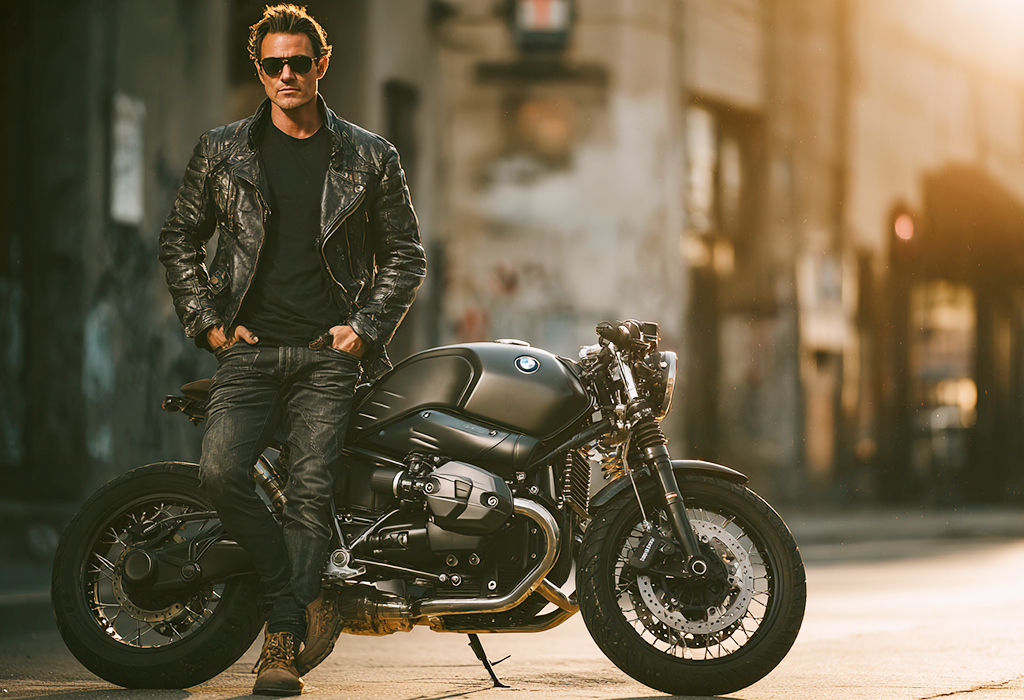
Have you ever been out driving and suddenly found yourself surrounded by a pack of bikers? One moment it’s quiet, and the next you’ve got the roar of straight pipes to your left, your right, and right behind you. Or maybe you’ve been in a bar when ten guys walk in—leather vests, patches, boots—filling the room with a presence that makes everyone turn their head.
Here’s the truth: love it or hate it, biker style makes an impact. It’s a look loaded with history, function, and cultural meaning. But it’s also a style you have to respect. If you get it wrong, you’re not just committing a fashion faux pas—you could offend people in a way you really don’t want to.
Today, we’re breaking it all down: the origins of biker gear, the role movies and military surplus played in shaping the look, and how you can incorporate the style into your wardrobe without looking like a wannabe.
1. The Birth of Motorcycle Clothing: Purely Practical

Beginnings
Motorcycling took off in the early 1900s and ’20s, long before anyone thought of it as “fashion.” Riders wore whatever worked to keep them alive and comfortable on the road.
The Early Essentials:
- Long Coats – Usually heavy wool or leather, they kept wind and rain out on open roads.
- Tall Riding Boots – Borrowed from horse riding, they protected legs from engine heat and debris.
- Leather Caps – Not much for impact protection, but kept your head warm and dry.
- Goggles – Fully enclosed to shield eyes from wind, dust, and gravel.
Back then, motorcycles were cheaper than cars, so riders were often working men. The style wasn’t about looking rebellious—it was about surviving the ride.
2. The Veteran Effect: Brotherhood on Two Wheels

After World War II, thousands of veterans came home with money in their pockets, mechanical skills, and a taste for adrenaline. Many missed the camaraderie of military life and found it again in motorcycle clubs.
They also had easy access to military surplus gear—tough jackets, heavy boots, and other functional clothing. The look became more uniform, not just for practicality but for identity.
The 1947 Hollister “Riot” (heavily exaggerated by the press) cemented the public image of bikers as dangerous outsiders. And as often happens, public backlash only made the clubs stronger. They embraced the “outlaw” label and developed an even more distinct visual identity.
3. Hollywood Turns the Biker Into a Style Icon

If one man can be blamed (or thanked) for making the leather biker jacket a cultural symbol, it’s Marlon Brando. In The Wild One (1953), Brando’s character Johnny Strabler made the black leather double rider jacket the uniform of rebellion.
Why the Double Rider Works (Function First):
- Asymmetrical Zipper – Creates a double layer of leather across the chest, blocking wind.
- Short Waist Cut – Allows freedom of movement while seated on a bike.
- Extended Sleeves – Keeps wrists covered when arms are stretched to the handlebars.
- Belted Waist – Tightens the fit, preventing wind flap at high speeds.
It wasn’t just about looking cool—this was high-performance gear for the time. The fact that it looked intimidating was a bonus.
4. Alternatives: The Café Racer

Not all riders wanted the bulk of a double rider jacket. Enter the café racer: a sleeker design favored by sport and touring riders.
- Straight Center Zipper – Minimalist and aerodynamic.
- Streamlined Fit – Works well with a forward-leaning riding position.
- Zipped Pockets – Keeps valuables secure on long rides.
This style often appeals to men who want a biker-inspired look that pairs more easily with everyday outfits.
5. The Vest & Patches: Wear With Care
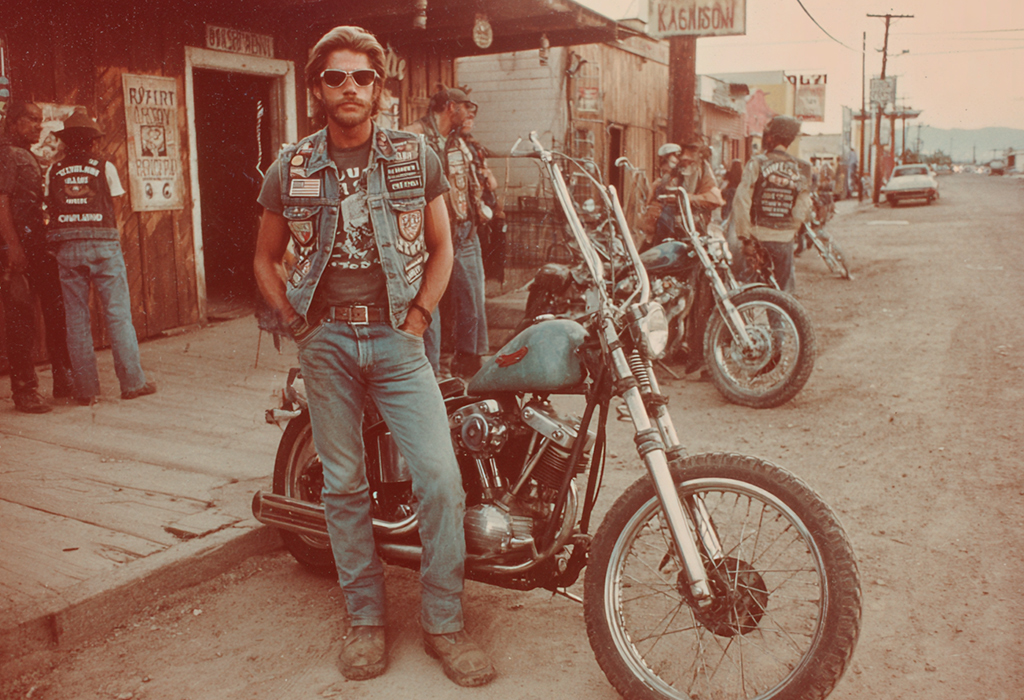
By the 1960s–70s, biker vests had become a central part of club identity. And here’s where the rules matter most.
The Three-Piece Patch
- Top Rocker – The club’s name.
- Center Patch – The club’s emblem.
- Bottom Rocker – The territory or chapter.
Not all clubs use all three pieces, but the patches—especially the center—are earned, not bought. Wearing unearned patches is the biker equivalent of wearing unearned military medals.
Other patches may include:
- Nicknames – What the rider is known as in the club.
- Rank – President, Vice President, Road Captain, etc.
- Memorials – To honor fallen members.
Respect Rule: If you don’t ride with that club, don’t wear their colors. No exceptions.
6. Accessories That Complete the Look
Gloves

- Fingerless Gloves – Good for grip and style, but low protection.
- Full Gauntlet Gloves – Extend past the wrist, often armored for crash safety.
Boots

- Classic Types – Engineer, harness, or work boots.
- Riding-Specific – Heat-resistant, water-resistant, and built with non-slip soles for oil-slicked roads.
Helmets

- Full-Face – Best protection.
- Modular – Flips up for open-face comfort when parked.
Antonio’s tip? Wear one. He’s been in an accident, and a helmet saved his life.
7. The ’80s–’90s: Mainstream Biker Chic
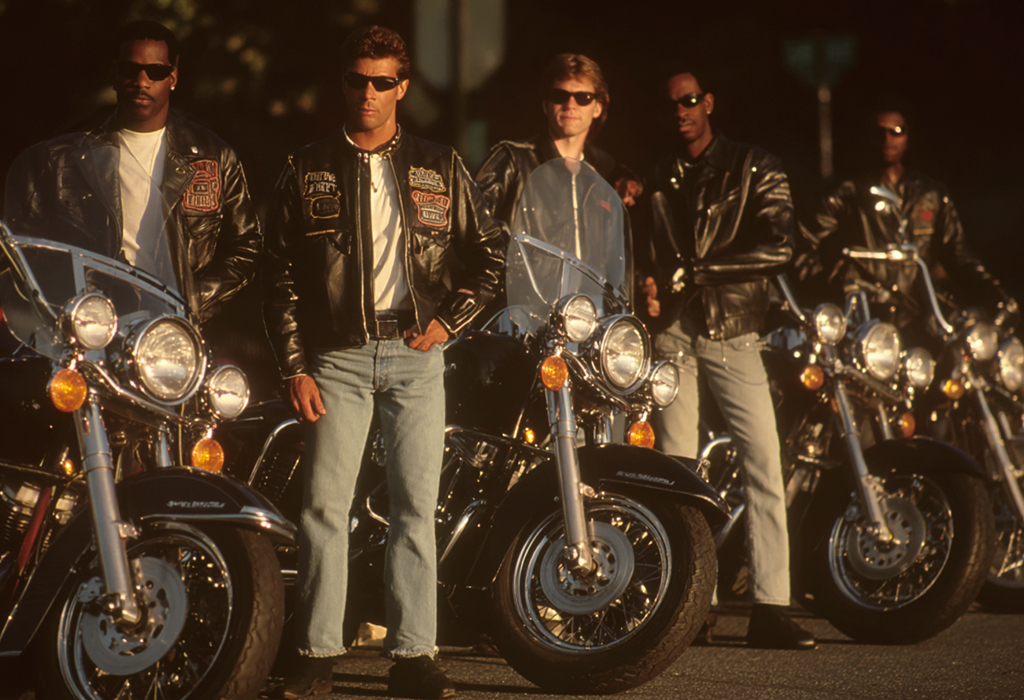
Motorcycling shifted in the ’80s and ’90s. The outlaw clubs were still there, but now you also had “RUBs” (Rich Urban Bikers)—lawyers, doctors, and executives riding expensive Harleys on the weekends.
Harley-Davidson marketed the idea of freedom so effectively that non-riders started buying the jackets, boots, and T-shirts just for the look.
The stigma faded. Biker style moved from subculture to mainstream.
8. Modern Biker Style: Wearing It Without Looking Like a Poser
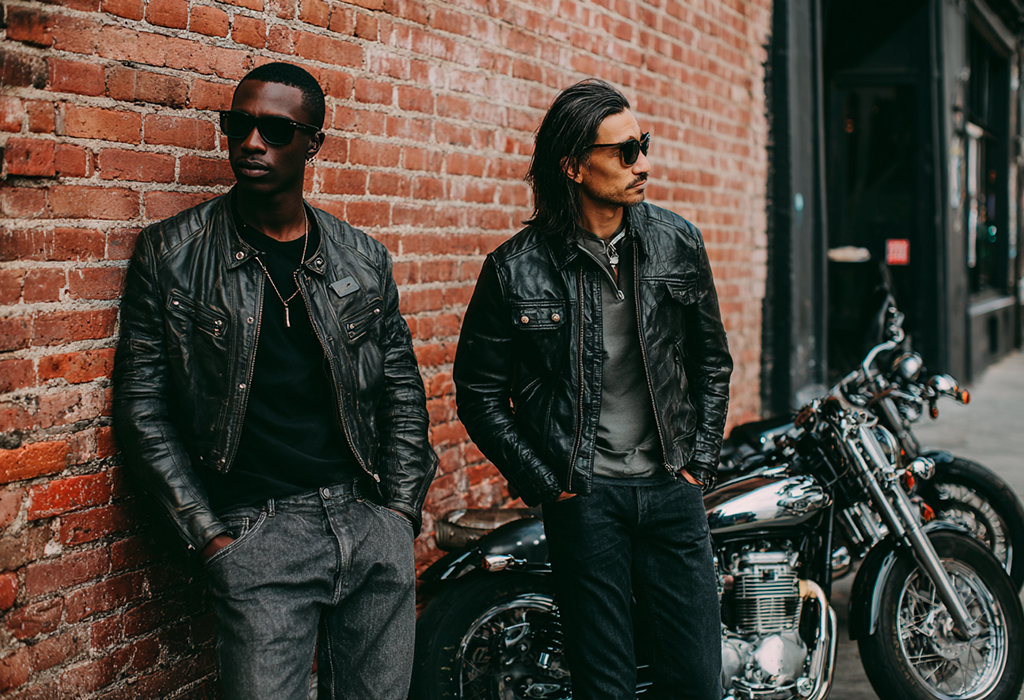
If you want to bring elements of biker style into your wardrobe, you can—but you have to do it smart.
Start Small – Choose one statement piece (like a leather jacket) instead of head-to-toe biker gear.
Go Neutral – Black, brown, and dark denim work with everything and age well.
Prioritize Fit – Too loose looks sloppy. Too tight looks like you borrowed it.
Skip Club Patches – Choose plain jackets or fashion-brand badges.
Balance the Outfit – A biker jacket over slim jeans and clean boots works. A biker jacket plus leather pants plus chains? That’s Halloween territory.
9. Quick-Reference: Key Pieces & How to Wear Them

| Item | Original Purpose | Modern Style Tip |
|---|---|---|
| Double Rider Jacket | Block wind, protect in a crash | Wear with jeans and a plain tee for instant presence |
| Café Racer Jacket | Streamlined riding gear | Layer over a button-down for smart-casual edge |
| Gauntlet Gloves | Protect hands/wrists | Winter wear with peacoats or field jackets |
| Engineer Boots | Shield legs from heat | Pair with raw denim and cuff to show detail |
| 3-Piece Patch Vest | Club identity | Don’t wear real colors unless you’ve earned them |
10. The Golden Rule: Respect the Culture

Biker style has over 100 years of history. It evolved from pure practicality to a visual language of rebellion, brotherhood, and independence. You can borrow the look—but never the symbols you haven’t earned.
Because here’s the thing: in the biker world, your gear isn’t just clothing. It’s a badge of identity, loyalty, and history. And when you respect that, you not only look better—you show you’re a man who understands the power of what he wears.