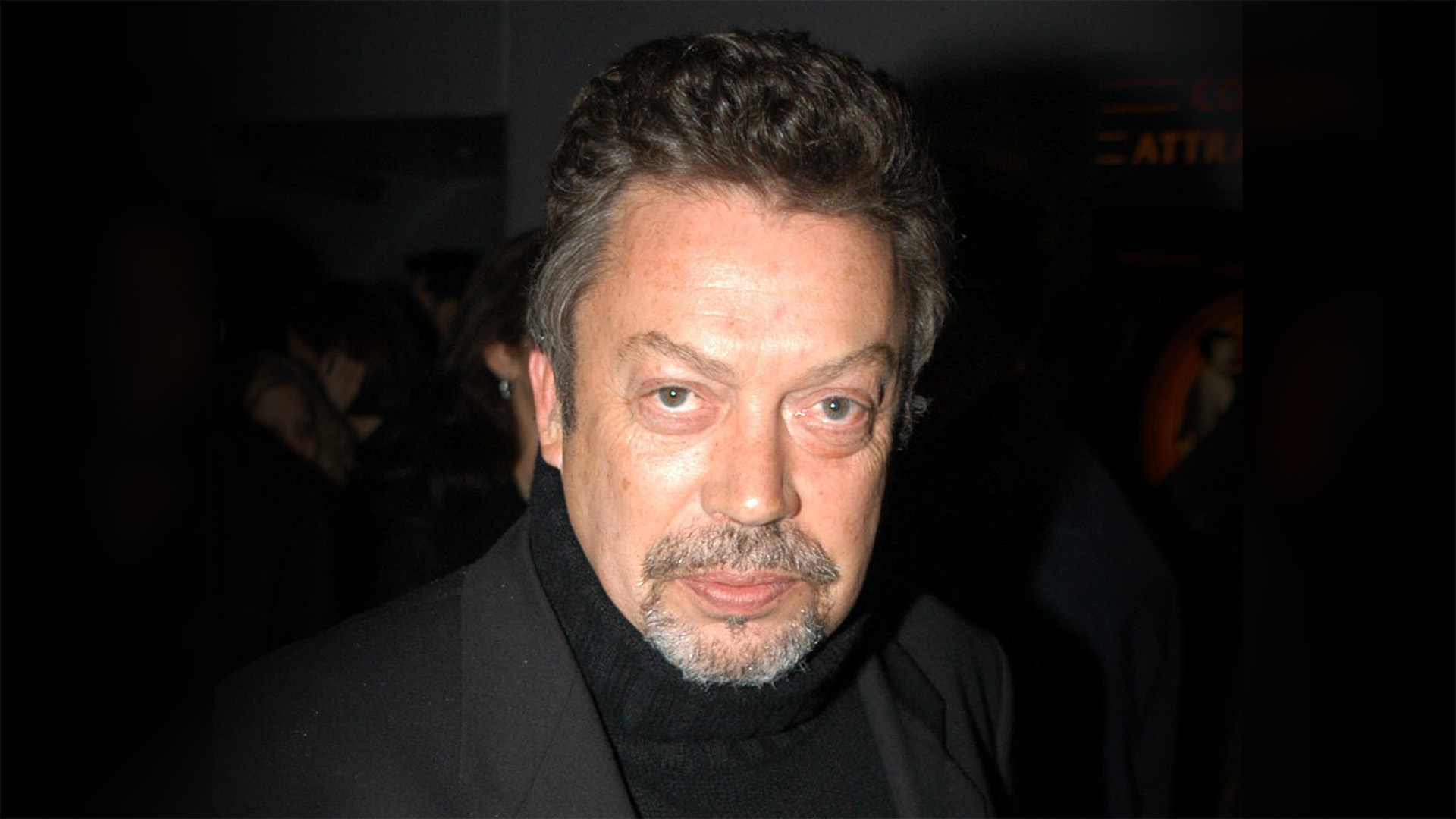
Tim Curry, the incomparable performer whose corset-clad turn in The Rocky Horror Picture Show became a lasting symbol of queer freedom and self-expression, has died. He was 80.
Curry died Tuesday night at his Los Angeles home, according to TMZ. A cause of death has not been publicly disclosed. He suffered a major stroke in 2012 that left him living with paralysis and using a wheelchair.
Across a career spanning more than five decades, Curry established himself as one of entertainment’s most versatile and delightfully unpredictable performers. He could seduce audiences as Dr. Frank-N-Furter, terrify them as Pennywise the Clown, send them into hysterics as Wadsworth in Clue and charm an entirely different generation with the unmistakable voice of Nigel Thornberry.
But for countless LGBTQ+ fans, Curry will always be the man who strutted across the screen in fishnets, heels and a corset while inviting audiences to surrender to absolute pleasure.
The Role That Made Curry a Queer Icon
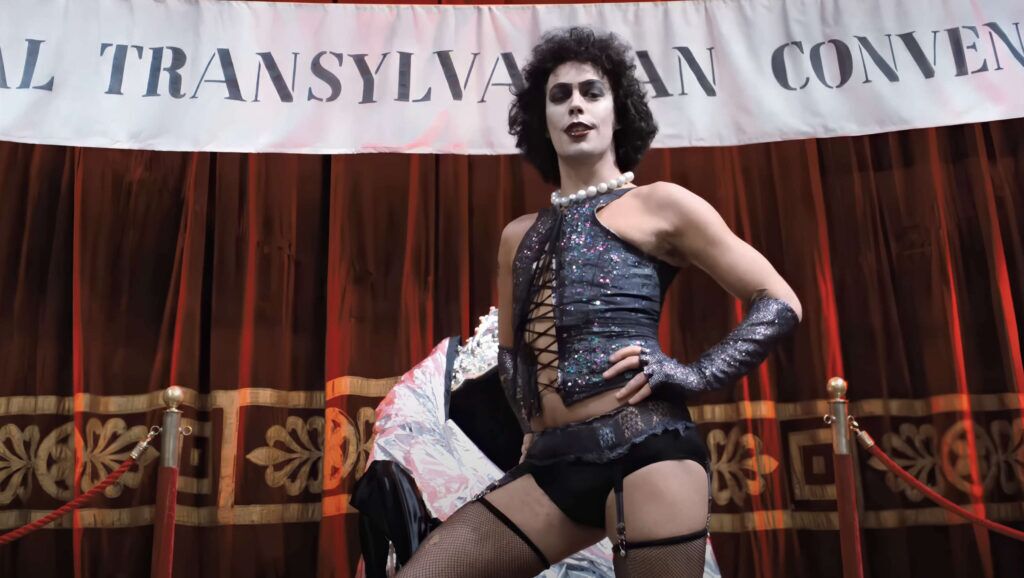
Curry originated the role of Dr. Frank-N-Furter in the 1973 London production of The Rocky Horror Show. He continued with the musical as it moved to larger London venues and Broadway before reprising the character alongside Susan Sarandon and Barry Bostwick in the 1975 film adaptation.
Frank-N-Furter was glamorous, commanding, sexual and impossible to contain within conventional ideas about masculinity or femininity. Curry approached every element of the character with complete conviction, turning an outrageous mad scientist into one of the most enduring figures in queer popular culture.
The film follows strait-laced couple Brad and Janet after a car breakdown leads them to Frank-N-Furter’s castle. What follows is a riot of mad science, desire, rock music and gender-defying spectacle unlike almost anything mainstream movie audiences had seen at the time.
Curry helped shape the character alongside writer Richard O’Brien, whom he met while appearing in a West End production of Hair. Frank-N-Furter was initially envisioned as a German scientist wearing a lab coat. With Curry’s influence, he became the corset-clad creation who spoke “like the queen” and commanded every room he entered.
Despite the performance that would eventually make Curry an icon, The Rocky Horror Picture Show initially struggled to find an audience.
“It died a death. It was a failure. And I was crushed,” Curry recalled during a 2025 interview with CBS Sunday Morning. “I thought that it might well be [the end of my movie career].”
Instead, that supposed failure became a cultural revolution.
A Place Where Queer Audiences Could Belong
Midnight screenings transformed Rocky Horror into an interactive experience. Fans arrived dressed as the characters, shouted responses at the screen, sang along and acted out scenes as the movie played.
For LGBTQ+ people, these screenings became more than late-night entertainment. At a time when queer visibility was far less common, theaters offered places where audiences could experiment with clothing, gender expression and sexuality among people who understood what it meant to feel different.
Curry recognized what the film and the communities surrounding it meant to fans.
“It’s a chance for people to try on a few roles for size, maybe help them figure out their own sexuality,” he told NPR in 2005. “I’ve certainly had some very interesting and moving mail from people who’ve said, ‘Thanks for helping me figure out who I was,’ and that’s very nice.”
Reflecting on the film’s 50th anniversary, Curry said some viewers left screenings ready to express things they had previously been afraid to say. Asked whether the film gave people permission to be themselves, he simply answered, “I think so.”
He also believed its message could reach beyond sexuality.
“The motto ‘Don’t dream it, be it’ is not necessarily limited to your sexuality,” Curry told Entertainment Weekly. “I think it applies to whatever you dream to be.”
A Career Filled With Villains, Butlers and Kings
Curry followed the role of Frank-N-Furter with a remarkably varied collection of characters across film, television and theater.
In 1982, he played scheming antagonist Rooster Hannigan opposite Carol Burnett in Annie. Three years later, he delivered an unforgettable physical comedy performance as Wadsworth, the frantic butler attempting to solve a murder in Clue.
His villainy took a much darker turn when he played Pennywise in ABC’s 1990 adaptation of Stephen King’s It. More than 37 million households tuned in as Curry transformed the traditional image of a clown into something sinister.
Curry’s other memorable films included The Hunt for Red October, Home Alone 2: Lost in New York, The Three Musketeers, Congo, Charlie’s Angels and Muppet Treasure Island.
On television, his larger-than-life guest performances frequently stole the show. Curry played Adrian Monk’s imposing nemesis Dale “the Whale” Biederbeck on Monk and an acerbic reality competition judge named Nigel St. Nigel on Psych. He explored much darker territory during a two-episode arc of Criminal Minds, portraying a serial killer shaped by childhood trauma.
The stage remained essential to his career. Curry received three Tony Award nominations for playing Wolfgang Amadeus Mozart in Amadeus, alcoholic actor Alan Swann in My Favorite Year and King Arthur in Monty Python’s Spamalot.
The Voice Behind a Generation of Characters
Even those who had never seen Curry onscreen likely knew his unmistakable voice.
He won a Daytime Emmy in 1991 for playing Captain Hook on Fox’s Peter Pan and the Pirates. He later voiced the destructive spirit Hexxus in FernGully: The Last Rainforest and became one of Nickelodeon’s most recognizable animated fathers as Nigel Thornberry on The Wild Thornberrys.
His audiobook work earned him a Grammy nomination for A Series of Unfortunate Events: The Bad Beginning. Curry was also a recording artist, releasing three rock albums between 1978 and 1981.
After experiencing a major stroke in 2012, Curry began using a wheelchair and largely stepped away from live-action performances. He continued working as a voice actor, including taking over the roles of Chancellor Palpatine and Darth Sidious on Star Wars: The Clone Wars following the death of Ian Abercrombie.
In 2016, Curry returned to the world that made him a queer icon as the Criminologist in Fox’s The Rocky Horror Picture Show: Let’s Do the Time Warp Again. Laverne Cox stepped into the heels of Frank-N-Furter, with Curry’s presence connecting the new production to its groundbreaking predecessor.
Curry later returned to the screen in the 2024 horror film Stream.
Private About His Own Identity
Born Timothy James Curry on April 19, 1946, in Cheshire, England, the actor remained intensely private throughout his life. He never married and had no children.
Even as Frank-N-Furter inspired decades of speculation about Curry’s sexuality, he declined to publicly define that part of his life.
In his 2025 memoir, Vagabond, Curry reflected on his life and expansive career while maintaining a firm boundary around his romantic relationships.
“Well, I think that my romantic life is none of anybody’s business, and I say so rather thoroughly in the book,” Curry told The New Yorker when asked about his sex life.
“Well, I wasn’t lonely! It wasn’t too difficult to get laid. But it was the 70s, which is crucial to what it is, I think.”
Curry’s importance to LGBTQ+ culture never depended on the identity others wanted to assign him. It came from the freedom he embodied onscreen, his appreciation for the queer audiences who embraced his work and the communities that grew around it.
Fifty years after first stepping into Frank-N-Furter’s heels, Curry distilled that legacy into one characteristically direct piece of advice:
“Be who you want to be, and have the balls to do it.”