Warning: Spoilers for The Last HouseThe Last House is Netflix’s latest big hit, and the new thriller’s ending is worth breaking down in detail. Featuring a fantastic cast, including Wagner Moura and Greta Lee, Netflix’s latest sci-fi thriller begins with an intriguing premise locking all of its characters inside of their homes. However, it is the film’s explanation that makes this idea worthwhile.
The ending of The Last House has received considerable focus, as it raises some challenging questions. All of this is wrapped up in the film’s unusual themes, which explore the idea of forced isolation. This has often been seen as an allegory to capture many of the feelings wrapped up in the COVID-19 pandemic and its cultural effects.
The new film does some surprising things, and contains several curious twists. The tone jumps all over the place, with many scenes highlighting the spirit of perseverance and sweet moments of connection between the family, while others lean much further into the horror of the film’s unique premise. The balance of this is tough, but often works.
Granted, reviews for The Last House have been mixed. Still, even the most negative responses to the film have found things to praise in its construction.
Much of this comes down to the use of location, and how the Delgado’s family home is turned into a dynamic stage upon which to tell various compelling stories throughout the family’s lockdown period, into the powerful ending.
Explaining The Final Conflict And An Act Of Kindness

The story of The Last House is much more drawn out than many might expect. While the first half of the movie shows the Delgado family struggling to survive while locked inside their home over the course of a few months, the midpoint suddenly jumps five years into the future.
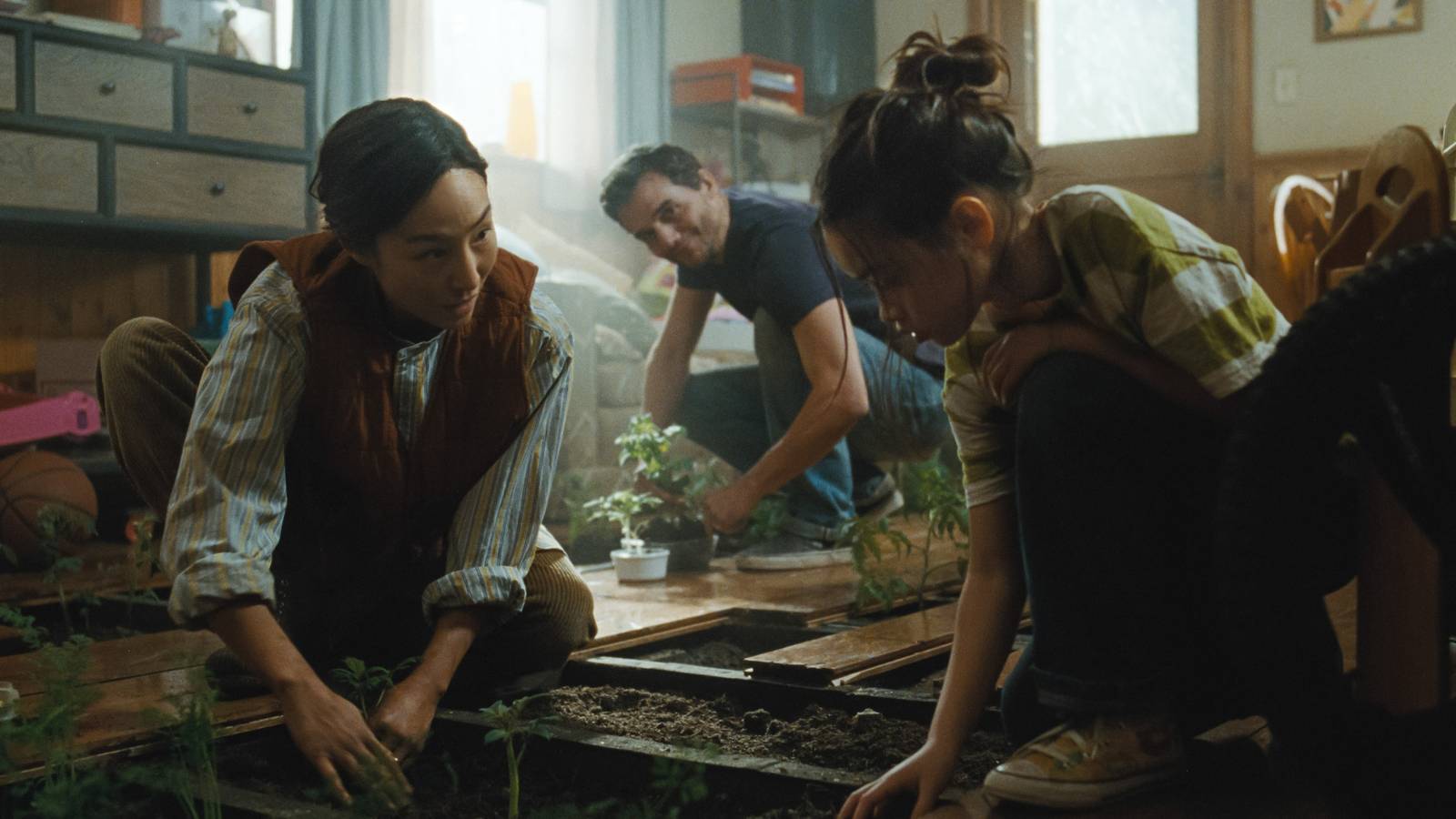
With this, the family has grown used to being trapped and has made the most of it. They continue their chimney-fishing, and they have a series of plants growing throughout the house to keep them fed. They have become self-sustaining in an unexpected way, showing the triumphant resolve of the human spirit.
Even amidst this, however, they do not have everything that they need. After a ferret is caught in the trap and brought into the house, Ruth receives a bite on the finger, and becomes sick. The commotion around the family’s attempt to leave the house for antibiotics draws in their captors, leading to a powerful showdown.
The ending of The Last House often conjures images of Spielberg films like E.T. The Extra-Terrestrial, especially in how it looks at humanity in alien life.
After a dazzling and horrific scene of the family being chased through their home by the terrifying creature, they are finally able to subdue it. However, with a knife to its face, Jason finds himself unable to kill it.
Instead, it is released, and this moment of kindness and empathy results in freedom. The monster releases the family and calls out to the other creatures, ensuring their safety. The Delgado family has proven that they possess a kindness that the creatures did not expect, and they are granted their freedom as a result.
The Terrifying Monsters, Their Goal, And Their Origins

The movie does not explicitly say where the monsters came from, but it is essentially unveiled through several suggestions. The biggest of these runs at the very beginning of the film, where an Arthur C. Clarke quote runs across the screen: “How inappropriate to call this planet Earth when it is clearly Ocean.”
As seen in the tide having washed away most of the city in the end, the squid-like creatures, with faces that conjure images of the Elder God Cthulu, have come from the ocean. They are sentient, and their actions in the film seem to be in order to fight back against how human action has created a climate change crisis.
Ruth proposes the idea that the creatures have come from the ocean, and their actions, and their use of water, seem to confirm this. They are not monsters looking to conquer the Earth; instead, they are complementary life forms from beneath the sea who are doing everything that they can to save it.
As seen in the proliferation of nature outside the family’s home, with incredible plant growth and many wild animals, the purpose of locking humans inside their homes is made clear. It is not a punishment; it is only practical. By sequestering human life away, devastating acts of destruction are stilled, allowing the natural world to resume its course.
The Delgado Family Escapes, In Search Of Other Survivors

Following their release from their home, the Delgado family discovers that much of Seattle has become submerged underwater. While the extent of the monsters’ assault on the land is not made entirely clear, it makes sense to assume that much of the Earth has followed suit.
The Delgado family then take their neighbor’s boat, and rename it from “Seas the Day” to “Cassidy”, in tribute to their late dog. They set out across the ocean-swept world with a radio, looking for other survivors.
The film ends on a promising note of sorts: the radio echoes with a tinny “Hello?“, presumably from another survivor, before fading to black. While this does promise a future to this world, it is not clear if the team behind the movie intends to follow up on that.
Could The Last House Get A Sequel?

The Last House receiving a sequel in some ways looks to be a challenging premise. After all, during the film’s ending, the Delgado family has essentially come to terms with the creatures. By showing an act of kindness, they are allowed to leave their home and go on with their lives.
Knowing this potential resolution might make a sequel difficult. The family has already discovered the humanity of the creatures, and that knowledge might make any future conflicts that much less tense. Understanding how to connect, with kindness and empathy, suggests that future difficulties could dissolve with ease.
As a result, there does not appear to be much conflict left to explore. Following up on this, in an interview with Time, William Robinson, the writer of the film, suggested that the truce between the species is fairly concrete:
“It’s two afraid species thinking the other one is out to destroy them, and in a moment of empathy, they realize they aren’t that different. They can’t understand each other, but they’ve seen how hard each other has struggled to survive. They’re going to give them their lives back, in hopes that they’ll do the same for them. Maybe we do deserve a life on this planet. But the family doesn’t know that—maybe as soon as the credits roll, they wipe them out on the boat.”
The tension is still there, certainly, but Robinson’s explanation suggests that the conflict between the species has essentially been resolved, at least for now. While a sequel could happen, as the Delgado family does hear a response on their radio, it appears that The Last House and its story have met their natural resolution.

- Release Date
-
August 7, 2026
- Runtime
-
110 minutes
- Director
-
Louis Leterrier
- Writers
-
Matthew Robinson
- Producers
-
Jenno Topping, Joe Neurauter, Kori Adelson, Louis Leterrier, Omar Sy, Oly Obst, Peter Chernin
Cast