Let’s be honest—most fashion advice out there doesn’t account for real cold.
I’m talking about places where snow doesn’t fall gently; it punches you in the face. Where wind doesn’t whisper—it howls. Where “style” is still important, but second to survival.
If you live somewhere that sees serious winter—think the northern U.S., Canada, or even the southern tips of South America – then the sherpa jacket is more than just a fashion statement. It’s a functional tool.
And if you live somewhere with just a few inches of snow and a couple cold days a year, you’ll still find a sherpa jacket is a versatile, classic winter piece worth owning.
Let’s break down what makes the sherpa jacket such a timeless cold-weather essential—and how to wear it with confidence.
What Is a Sherpa Jacket, Really?

Despite the name, modern sherpa jackets aren’t designed by Himalayan mountain guides. The name “sherpa” in this case refers specifically to the lining.
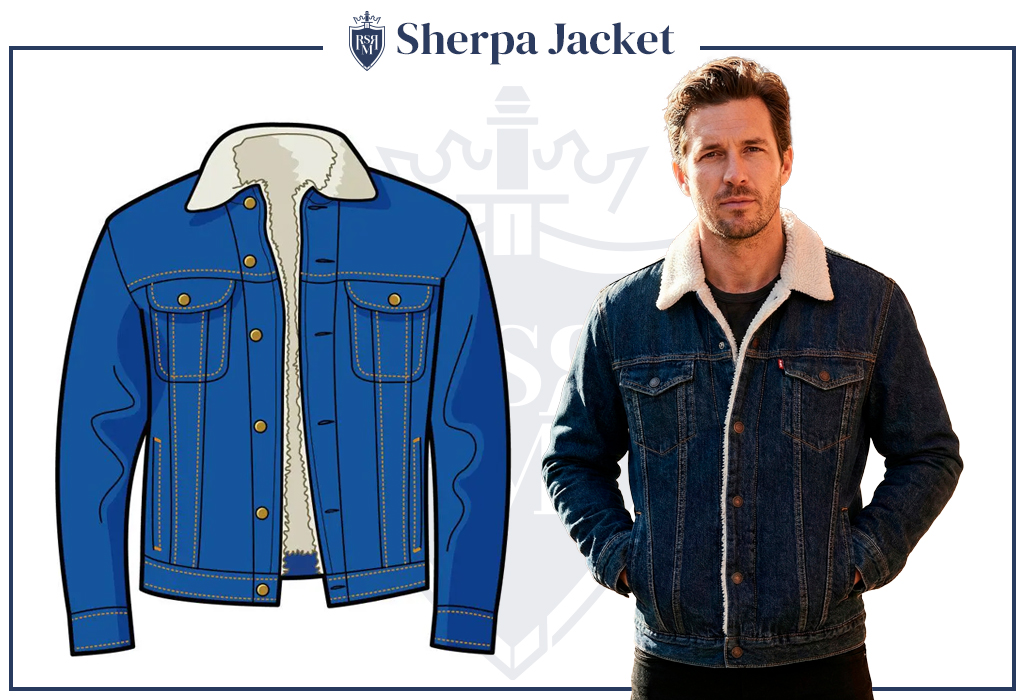
In the garment industry, “sherpa lining” refers to a polyester fleece with a deep pile and large, fuzzy “naps” that give it a soft, textured appearance. The feel is similar to sheep’s wool, but it’s:
- Lighter weight
- Less bulky
- Quicker drying
- More affordable
- And free of ethical concerns related to animal products
Sherpa lining looks and feels like wool—but performs more like high-quality synthetic fleece.
That being said, in places like Ukraine and Russia, you’ll still see sherpa-style jackets lined with real sheep’s wool. They’re heavier, more expensive, but also extremely warm and durable—true luxury workwear in those regions.
Why Sherpa Lining Alone Isn’t Enough

While sherpa fleece excels at trapping heat, it doesn’t stand up well to wind or moisture on its own. That’s why sherpa jackets pair the lining with a durable outer shell—usually heavy cotton, canvas, denim, or leather.
These outer layers act as a barrier against the elements while the sherpa interior keeps warmth locked in. The best-made jackets feature double or triple stitching to prevent heat loss through the seams and increase long-term durability.
Some models go a step further by adding a layer of quilted padding between the outer shell and the sherpa lining. That provides even more insulation, but does increase bulk and weight.
Classic Sherpa Jacket Construction and Style

Your typical sherpa jacket is thigh-length and straight-sided. It usually comes with:
- A full front zipper
- Two slit hand pockets
- Two flap breast pockets
- One or two inner pockets (which are actually super useful)
The collar is typically a wide turndown style and lined with the same sherpa fleece. This detail does double duty—it gives the coat that iconic “winter” look and helps wick away moisture from snow or breath condensation.
Most sherpa jackets stick to solid earth tones—tan, brown, olive, navy—but you’ll also find models in black, grey, and even camouflage or blaze orange for hunting purposes.
Solid colors work best for style. They project sturdiness and reliability in a way that flashy patterns just don’t.
Sherpa Jacket Variations Worth Considering

If you’re looking for a sherpa jacket with a little more style—or built for a specific use—here are the most common upgrades and options:
Button-Front Closure
Instead of a zipper, some sherpa jackets use large buttons or wooden toggles. While slightly less convenient, they’re easier to repair. That’s why this style is popular with guys who work outdoors—on farms, in the forest, or anywhere gear gets put to the test.
Parka-Length Coats
These go all the way down to the knees and typically include a hood, sometimes with fur (real or synthetic). Ideal for brutal winter climates where every inch of coverage matters.
Waist-Length Sherpa Jackets
If you’re more mobile—on the job site or just moving in and out of vehicles—a shorter, waist-length sherpa jacket gives you warmth without bunching or restricting movement.
Leather or Suede Outer Shells
Leather adds weight but also boosts windproofing and water resistance. Suede sherpa jackets are more stylish than rugged, but still offer solid warmth if well maintained.
How to Wear a Sherpa Jacket and Still Look Sharp
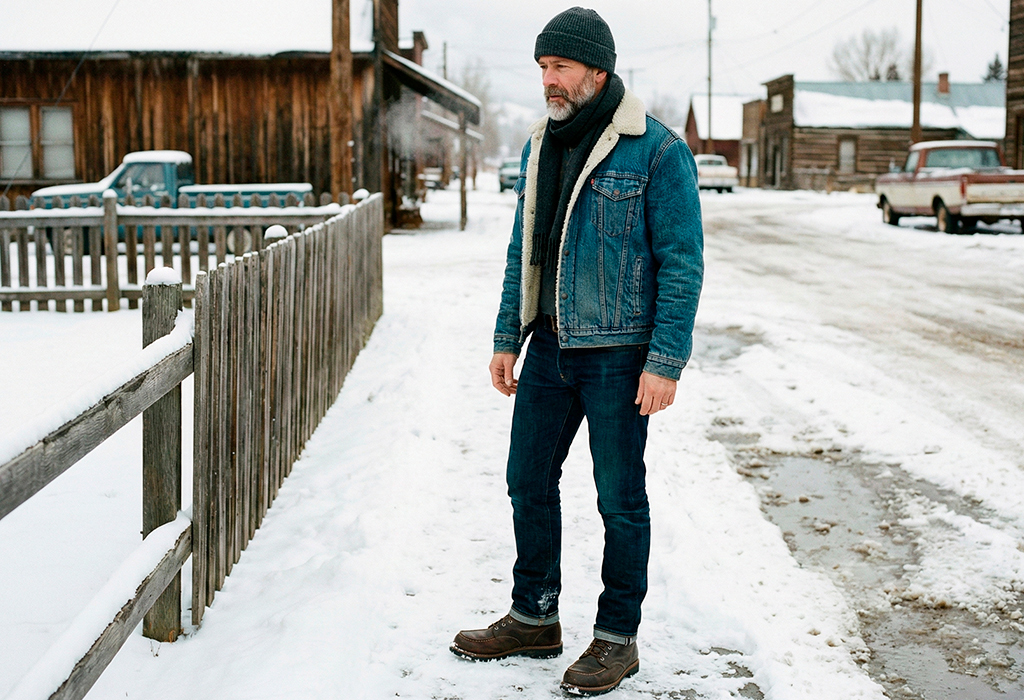
Now, let’s get something straight—sherpa jackets are functional first. That doesn’t mean you can’t wear one with style.
What to Wear With a Sherpa Jacket
You’re covering most of your upper body, so don’t overthink what shirt to wear underneath. Once you’re inside and take the jacket off, then the shirt matters. But outdoors, it’s all about the visible pieces—your pants, boots, and accessories.
Pants
- Dark jeans are a safe, classic match.
- Avoid blue jeans with a blue denim sherpa jacket unless you’re intentionally going for the Canadian tuxedo.
- Charcoal flannel trousers can dress things up without clashing.
- Canvas or duck work pants reinforce the rugged aesthetic.
Boots
The sherpa jacket begs for boots—not sneakers.
- Leather work boots
- Moc-toe boots
- Weatherproof dress boots with grip
These all fit the look and handle snow or slush like champs.
Accessories
A scarf—dark and simple—tucked into the collar adds class and function. Ear coverings are a must in freezing temps. A western-style hat adds flair, but when it’s below zero, no one’s judging your choice of a thick watch cap.
Quick Pro Tips for Sherpa Jacket Owners
- Don’t over-layer. A sherpa jacket is warm enough on its own for most days. Just add a base layer or thermal underneath.
- Brush the fleece inside occasionally to prevent matting and keep that fluffy feel.
- Spot clean dirt or salt stains with a damp cloth. Avoid machine washing unless the care tag says it’s safe.
Sherpa Jacket: Built for Function, Styled with Purpose
You’re not going to see sherpa jackets headlining Milan Fashion Week—and that’s a good thing.
They’re not built for the runway. They’re built for real life.
And when you pair that functionality with solid style fundamentals—boots, pants that fit, and a touch of masculine restraint—you get a look that says: “I can dig a car out of a snowbank and still look good doing it.”
Sherpa jackets are about showing up for life—prepared, warm, and with a quiet kind of confidence.
If that’s your kind of style, this jacket belongs in your closet.