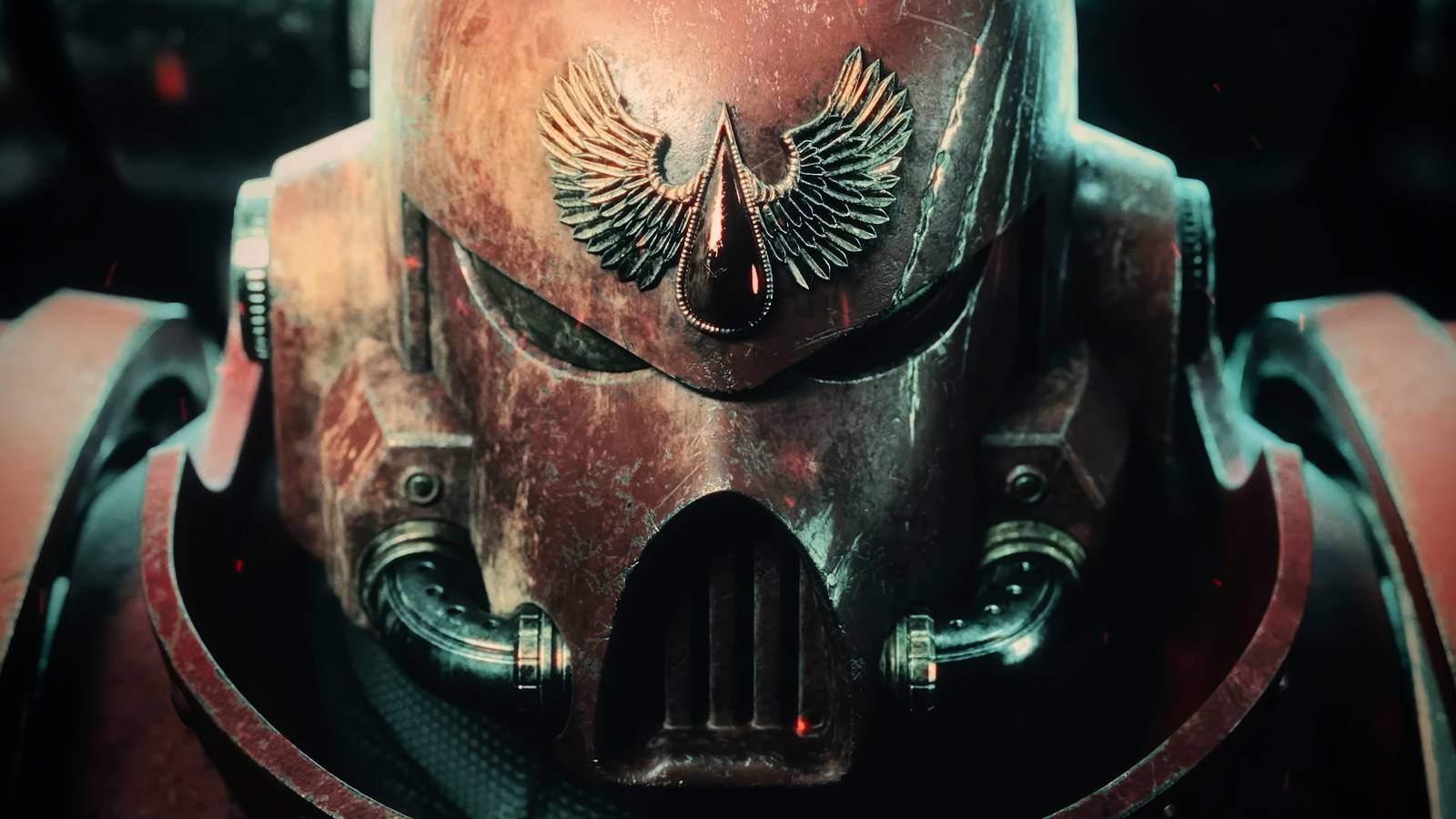
Despite the Warhammer 40k franchise having existed for decades, Event Horizon is still the closest thing to a live-action movie. While Henry Cavill’s Warhammer 40k TV series is still in development, the fact it has been in the works for three years and counting without entering production is slightly concerning.
There have been various Warhammer video games or animated spinoffs from the saga, but it’s a uniquely tricky property to bring into live-action. Its world is a mashup between medieval and futuristic designs, and the amount of lore within it can be overwhelming to newcomers – or even fans, in some cases.
Event Horizon Is Still The Closest Thing To A Live-Action Warhammer 40k Movie

That said, Cavill is a lifelong Warhammer 40k nerd, so the series is in good hands. While there has yet to be an official live-action take set in the universe, Event Horizon is the closest there is to a Warhammer movie. Sure, it might not feature any chainswords or Space Marines, but the influence is there.
Specifically, the design of the titular spaceship with its “Goth-Tech” feels lifted right out of the Warhammer universe. The Paul W.S. Anderson movie actually used Notre Dame Cathedral as inspiration during the design phase, explaining why everything is so baroque and menacing.
The biggest link between Warhammer 40k and Event Horizon is the use of a hellish, “Chaos” dimension. This is where the ship disappeared into for seven years, and it sounds a lot like Warhammer’s “Warp” dimension, a place where Chaos Gods dwell, and a sea of overwhelming psychic energy flows.
Exposure to this energy drives people to madness and violence, in addition to causing mutations. In short, it’s a very bad place, and the way Event Horizon depicts the massacre of the original crew or Weir’s (Sam Neill) demonic transformation lines up quite well with Warhammer’s Chaos Dimension.
Fans Have Labeled Event Horizon A Stealth Prequel To Warhammer 40k

Event Horizon’s screenwriter Philip Eisner once confessed to being a Warhammer fan, and that may have influenced his creation of this hellish parallel universe. Fans of the franchise have practically adopted Event Horizon as an unofficial Warhammer 40k prequel, depicting mankind’s first encounter with the Chaos Realm.
In Warhammer, humanity has developed the “Gellar Field” to shield itself from the effects of the Warp while traveling through it. Event Horizon might show what happens when there is no shielding from the psychic energies this dimension contains – and it’s not pretty.
The Event Horizon: Dark Descent prequel comic strengthened those ties further, with its version of what happened to the crew and the demonic beings involved. The film may not have been designed as a Warhammer 40k prequel, but when looking at how well they fit together, it’s hard to deny the links.
-
-

- Created by
-
Rick Priestley
- Character(s)
-
The Emperor of Mankind, Horus Lupercal, Roboute Guilliman, Abaddon the Despoiler, Eldrad Ulthran, Ghazghkull Mag Uruk Thraka, Farsight, Trazyn the Infinite
- Video Game(s)
-
Space Hulk, Warhammer 40,000: Dawn Of War, Warhammer 40,000: Dawn of War – Dark Crusade, Warhammer 40,000: Dawn of War 2, Warhammer 40,000: Kill Team, Warhammer 40,000 Space Marine, Warhammer 40,000: Armageddon, Warhammer 40,000: Storm of Vengeance, Space Hulk: Ascension, Warhammer 40,000: Deathwatch, Space Hulk: Deathwing, Warhammer 40,000: Dawn of War 3, Warhammer 40,000: Sanctus Reach, Warhammer 40,000: Inquisitor – Martyr, Warhammer 40,000: Gladius – Relics of War, Warhammer 40000 Mechanicus, Battlefleet Gothic: Armada 2, Necromunda, Warhammer 40,000: Battlesector, Warhammer 40,000: Chaos Gate – Daemonhunters, Warhammer 40,000: Tacticus, Warhammer 40,000: Shootas, Blood & Teef, Warhammer 40,000: Darktide, Warhammer 40,000: Boltgun, Warhammer 40,000: Rogue Trader, Warhammer 40,000: Space Marine II, Warhammer 40,000: Warpforge
Warhammer 40,000, often abbreviated as Warhammer 40K or simply 40K, is a miniature wargame produced by Games Workshop. Set in a dystopian science-fantasy universe, it is the most popular miniature wargame globally. Players enact battles using miniature models of warriors and vehicles on a tabletop battlefield. Since its first edition in 1987, the franchise has expanded into various media, including novels, video games, and board games.