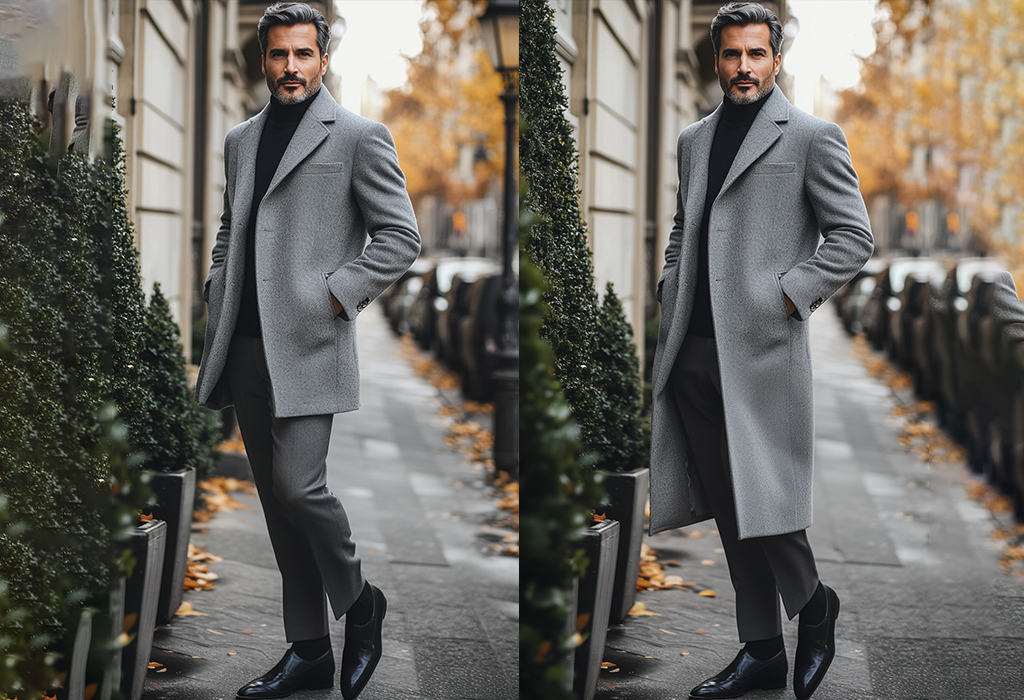
Bundle up, guys. Temperatures are dropping, things are getting wetter, and in a lot of places an extra layer just went from optional to mandatory. Which brings up a question we hear every winter: long vs. short coat — which one should you actually buy? If you live somewhere winters treat you harshly, chances are you already own a coat or two to battle the chill, the rain, or both.
Perhaps you have a parka or a puffer to your name.
However, if you’re a fella who’s into dressing well and looking good (and we’d bet on it, that’s why you’re here), then you might have a solid wool overcoat or a classic rain-repellent trench hanging in your coat closet that are just itching to be worn this winter season.
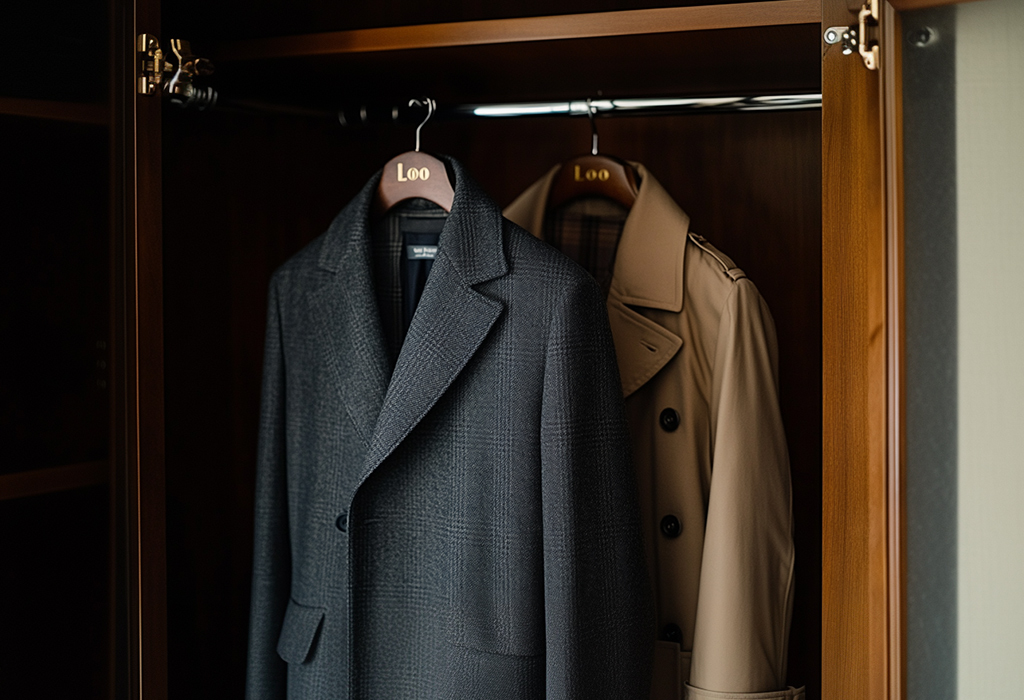
Or maybe you don’t quite yet, but you want to. There’s just something alluring about this particular genre of outerwear. The best examples carry a lot of drama, and they look especially sharp over tailored clothing, be it a suit or a sport coat and odd trousers.
So, you might be currently in the market for some quality winter outerwear. Only, a quick online search of available options will likely reveal to you that overcoats, trench coats, and other seasonal outerwear these days tend to come in a variety of lengths – and who’s to say which one is right for you?
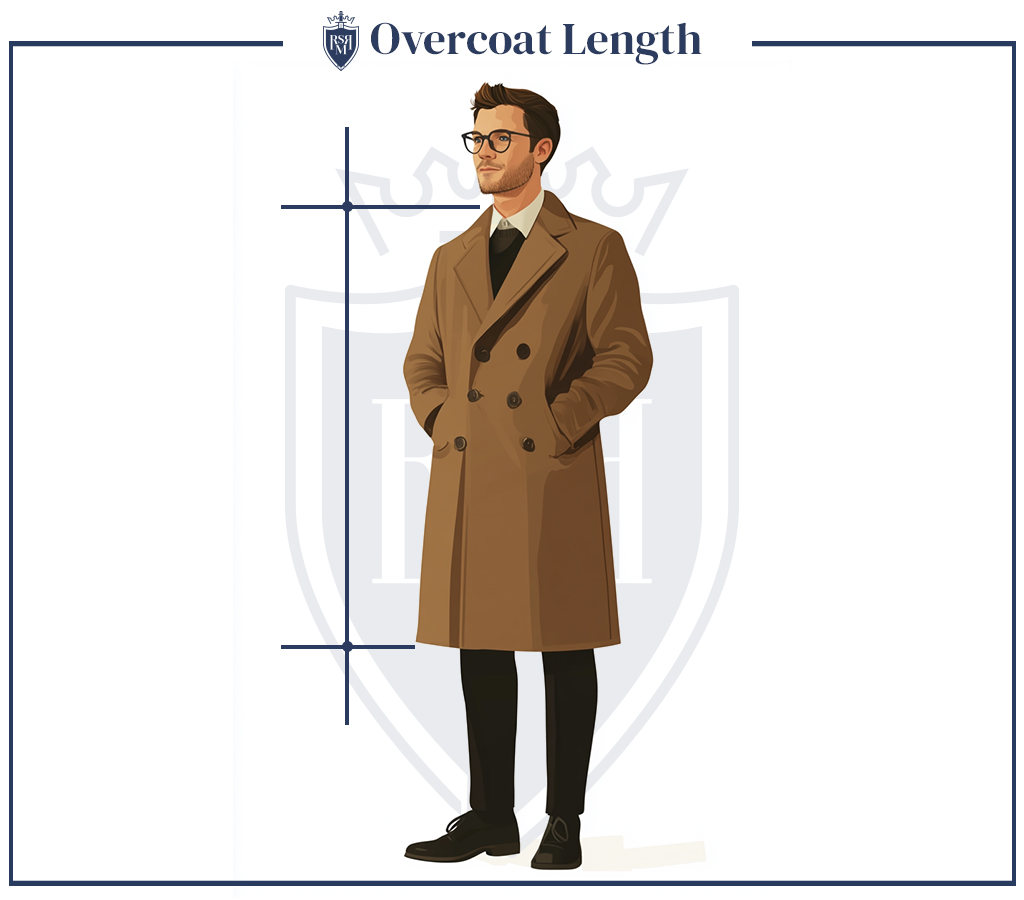
Well, we can advise you on that. That’s sort of our whole thing here at Real Men Real Style. So, what’s the deal with coat length? How do you determine whether or not to go for long outerwear that goes well past the knee, or perhaps something a bit more modest?
Below, we’ll break down exactly where your coat’s hem should land, the honest case for long and for short, how to wear a long coat if you’re on the shorter side, and a simple four-question test that settles it. Let’s get into it.
Long vs. Short Coats: The Styles Where Length Matters
For the uninitiated, we’re going to briefly define a few of the major players in the outerwear landscape where the length of the garment plays a significant role.
That means this discussion won’t really apply to your favorite sherpa-lined denim trucker jacket – this is for big coats only, such as overcoats, trench coats, mac coats, and even parkas, which tend to come down to your thighs.

These are garments engineered for late fall and winter wear, usually made from wool or a similar blend of fibers, can come in either single or double-breasted configurations, and feature lapels as well as at least some semblance of tailoring structure.

While often confused with and lumped together with overcoats, trench coats are a rainwear garment engineered to resist water either through a synthetic fabric or a cotton and/or wool gabardine composition. They are double breasted, feature a belting mechanism, and have wide lapels that can be folded over one another to protect your neck a bit better.
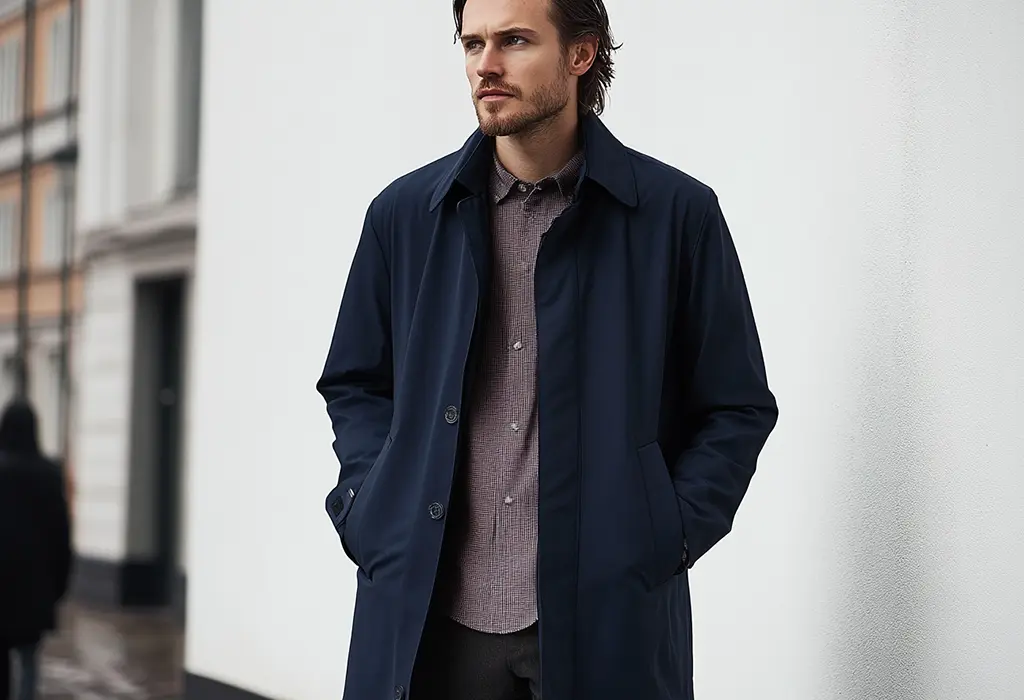
An abbreviated play on the original Mackintosh coat, these emerged at a similar time to trenches, also intended as a piece of rainwear, only they have a simpler design. They feature a single-breasted style, a stand-up, pointed collar, and are traditionally made from rubberized fabric to repel water.

These are a type of overcoat, traditionally cut from camel hair or a camel-and-wool blend, with a looser fit, a double-breasted closure, big patch pockets, and a half-belt across the back.

While much unlike the other options defined above, parkas are a reliable winter garment that’ll keep you warm, made from insulated, filled fabric compartments stitched together. They include large hoods and typically reach your upper thigh.
There are certainly many other types of jackets and coats for men, but the brief guide above should provide you with a handy rundown as we prepare to discuss how long your coats should be.
Coat Lengths Explained: Where Should Your Coat End?
Before you can pick long or short, you need to know what those words actually mean — and brands don’t agree. One company’s “long coat” stops at the knee. Another’s sweeps your calves. So ignore the product name and look at one thing: where the hem lands on your leg.
Here are the five lengths you’ll run into, shortest to longest:
- Hip to upper thigh — peacoats, parkas, most puffers, field jackets. Easy to move in, but it won’t cover a suit jacket or sport coat.
- Mid-thigh — car coats, duffle coats, short topcoats. The easiest length to drive in, and the shortest coat that still covers a tailored jacket.
- Just above the knee — today’s default for topcoats and overcoats. It covers your jacket with room to spare and works on almost every height.
- At or just below the knee — the classic overcoat and trench length. More leg covered means more of you stays warm and dry.
- Mid-calf — greatcoats, full-length polo coats, statement overcoats. Maximum warmth, maximum drama.
One distinction worth knowing: traditionally, an overcoat ends below the knee, and a lighter coat that ends above it is a topcoat. Most stores don’t bother with the difference anymore and sell both as “overcoats” — but now you know which one you’re really looking at.
And one rule never changes: your coat has to cover whatever jacket you wear under it. If your suit jacket peeks out below the hem, the coat is too short for that outfit. Period.
Coat Length Chart: Where Your Hem Should Land
From shortest to longest — measured standing, with your usual jacket underneath
Your coat should always cover the jacket you wear under it. If your suit jacket peeks out below the hem, the coat is too short for that outfit.
Why Coats Got Shorter (And Why They’re Getting Longer Again)
This topic really hinges on the age-old style vs. function debate, but there certainly are some caveats we’d like to introduce.
When it comes to overcoats, trench coats, and the like, a brief glance at their history will reveal that for the vast majority of the time they’ve been around, they were quite long, coming down to the knee or even well past it in many cases.
The reason for this is fairly obvious – they were meant to protect you from the elements and that includes your legs. In the case of wool overcoats, their longer length kept your lower half warm, while longer trenches simply kept more of you dry.

But around the mid 20th century, shorter iterations of these types of coats began to appear. Overcoats and trenches that ended at or well above the knee began to pop up amongst the fashion landscape.
Many theorize that this shift coincides with the popularity of the automobile, with shorter coat lengths making it a bit easier to get in and out of vehicles. This is further reinforced by the existence of a sub-genre of the overcoat – dubbed, the “car coat.” Which as you can likely infer, is a shorter, more agile version of a wool overcoat.

As the 20th century came to an end and at the advent of the 21st, shorter outerwear was everywhere, and the 2000s and 2010s saw them become the norm. Although this trend may have been rooted in the rise of car-culture, people also just got more used to the style and accepted it as the standard. Longer coats were seen as a bit more “old fashioned” by some.
However, there are those who theorize that this trend has been reinforced by clothing companies to sell coats that use less fabric (and thereby cost less to make).
Regardless of how it got to this point, it certainly was undeniable that shorter outerwear was more common than longer outerwear. That is, until the 2020s. In the last few years, perhaps due to the menswear renaissance, longer coats have eked their way back into the hearts, minds, and wardrobes of the fashionably-conscious.
A trip to New York, London, or any other major city will confirm that long coats are gaining ground.
The designers agree. Full-length overcoats with strong shoulders were one of the recurring looks of the Fall/Winter 2026 runway shows.
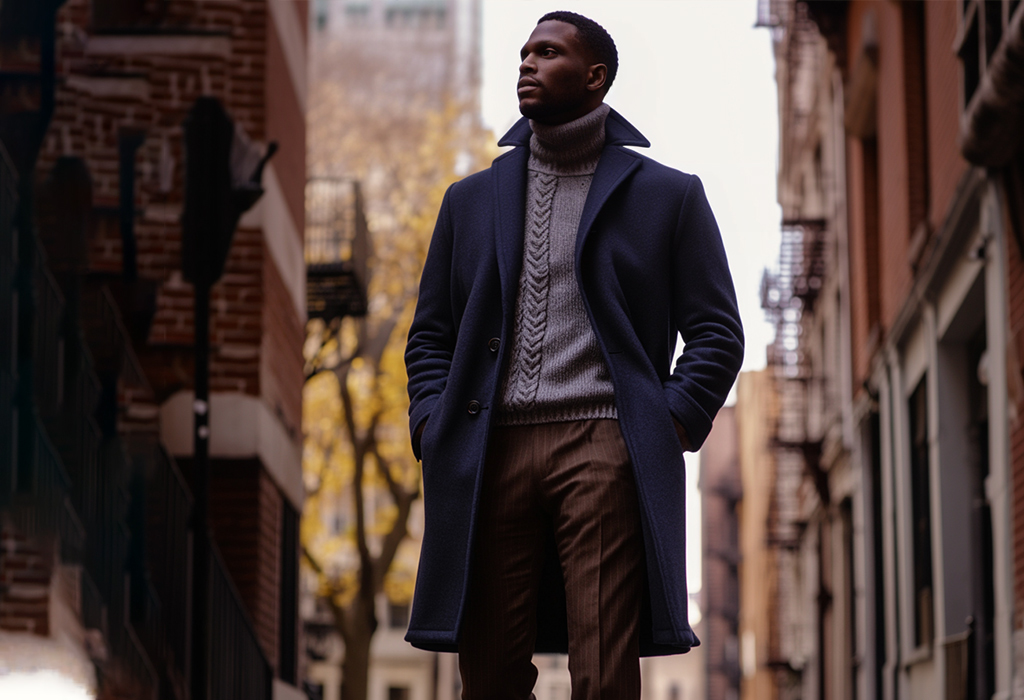
And so, the choice is now all the more so available – are long coats right for you?
The Case for Long Outerwear
Simply put, in the case of protective layers like overcoats and trenches, a longer length just provides more functionality. Short trench coats, for example, do little to keep your pants dry. And a long, thick wool coat that falls past one’s knees is sure to help on the especially chilly days.
There’s also the aesthetical implications. For the most part, big, long coats just ooze a bit more drama. Worn open, they flow in the wind, almost like a cape. Fastened, they look sharp and imposing. In terms of style and function, there’s hardly any downside.

That is, unless you truly find longer coats to be too cumbersome. If you drive a lot, this might be the case for you. Not necessarily, but it’s possible.
Our recommendation?
Why not embrace both? Shorter coats have their place. But longer coats do their jobs a bit better and in most cases, look a lot cooler. It might be wise to keep a parka handy, or perhaps a duffle coat which ends above the knee.
But we give long overcoats and trenches a sincere endorsement. They’ll serve you incredibly well when the weather turns nasty, and the drama they pack is simply unmatched.
There certainly are valid reasons to prefer a shorter coat. Some types of coats look best when they’re short. That’s why most puffers end at the waist. But you can’t discount the flair of a big piece of outerwear. It’s not a shy look. Starting out, it might even feel flamboyant. But the truth of the matter is, for most of menswear’s history, they were the norm.
And slowly but surely, they’re regaining popularity.
Some people seem to mistake length for an increase in formality. They assume the longer the coat, the “dressier” it is. But long outerwear can and often does work incredibly well on a casual level.
For example, Jacob Elordi has proven that a long black wool coat looks absolutely stellar over some classic blue jeans and a sweater or tee.

Okay, you’re thinking. But that’s Jacob Elordi. He’s 6’5”…
Listen, anyone can look good in cool clothes so long as it fits you. A big coat can be tastefully large and still fit you in all the right places. While some may claim that men who are shorter in stature shouldn’t wear long coats, we’d say – nah, man. The illusion of height isn’t the only metric of what makes something look good.
And long outerwear looks really, really good. Again, it’s up to you to decide, and lifestyle certainly does come into play here. In short – short coats can look good, but coats that were originally known for their dramatic length almost always benefit from actually being, well, long.
The Case for Short Outerwear
We just made the case for long coats, so let’s be fair to the other side. For plenty of guys, a shorter coat is the smarter buy. Here’s when:
- You drive every day. A mid-thigh car coat lets you get behind the wheel without sitting on a wad of wool or crushing the back of your coat into an accordion. That’s the whole reason the car coat exists.
- Your winters are mild. If “cold” where you live means 45°F and a little drizzle, a mid-calf greatcoat is more coat than you’ll ever need.
- You dress mostly casual. A peacoat or duffle coat over jeans and boots looks right at home. Those styles were designed short, and they look off when a brand stretches them long.
- You’re constantly on the move. Bikes, stairs, crowded trains — a shorter hem doesn’t flap, snag, or get stepped on.

The trade-off is simple. A short coat stops protecting you right where it stops. Your thighs and knees take the wind and the rain, and anything shorter than mid-thigh won’t cover a suit jacket. If you wear tailoring to the office a few days a week, a short coat alone won’t cut it.
Our take? A short coat makes a great second coat. For most men, it shouldn’t be the only one. If you’re weighing the short styles against each other, we compared the big three in overcoat vs. peacoat vs. parka.
How to Wear a Long Coat If You’re Not 6’5”
Back to Jacob Elordi for a second. Yes, he’s tall. But his long coat works because it fits him. The shoulders end where his shoulders end, the sleeves stop at the wrist, and the hem lands where it should. Get those three right and a long coat works on a 5’7” frame too. Here’s how to stack the odds in your favor:
- Buy a short-cut size. Many brands cut coats in Short, Regular, and Long, just like suits. If you’re under about 5’8”, start with Short — the hem, sleeves, and pockets are all scaled to your frame.
- Pick structure over slouch. Defined shoulders and set-in sleeves draw the eye up. Soft, sloping raglan shoulders drag everything down.
- Choose lapels that point up. Peak lapels, or a strong notch, create a line that pulls the eye toward your face.
- Go tonal. A charcoal coat over charcoal or gray trousers reads as one long, unbroken column. Big contrast between coat and trousers puts a hard line right at your hem.
- Keep the bottom half sleek. Slim, tapered trousers with little or no break, and a streamlined shoe like a Chelsea boot or a plain derby. Chunky lug soles and baggy pants pull the eye to the ground.
- Skip the bulk underneath. A fine merino sweater or a thin down vest keeps you warm without inflating your frame.
- Stop at the knee. On a shorter man, a coat that sweeps the calf starts wearing him. Just below the knee keeps the drama and leaves enough leg showing to keep you in proportion.

Do all of that and a long coat stops looking like a costume. It’s just a coat that fits you, and that’s what people notice. For more on dressing a smaller frame, see our style tips for shorter men.
How to Choose Your Coat Length: The 4-Question Test
Still on the fence? Answer these four questions honestly, in order. By the end you’ll know which length to buy.
1. What will you wear under it? If the answer includes suits or sport coats, your coat has to cover the jacket — mid-thigh at the absolute minimum, and above the knee or longer is better. If it’s mostly sweaters and jeans, every length is on the table.
2. How do you get around? If you drive every day, a coat that ends above the knee will make your life easier. If you walk, take the train, or stand on outdoor platforms, every extra inch of coat is an inch of leg that stays warm and dry.
3. How cold and wet does it really get? Mild winters: mid-thigh to just above the knee covers you. Real winters with wind, snow, or sideways rain: go to the knee or longer. Your legs will thank you in February.
4. How tall are you? Under about 5’8”: just above to just below the knee, in a short-cut size. Average height: anywhere from above the knee to mid-calf. Over 6’: mid-calf is easy for you to carry, and a short coat can end up looking like a jacket on your frame.
Two or more answers pointing long? Buy long. Split down the middle? Go for a coat that ends just above the knee. It covers a suit, it doesn’t fight you in the car, and it works on nearly every height.

One more rule from us: buy long, hem to fit. Shortening an overcoat is one of the easier jobs a tailor does. Lengthening one is a different story — there’s rarely enough fabric folded into the hem to add more than an inch or so. So if you’re torn between two lengths, take the longer one to your tailor and have it pinned up while you’re wearing the jacket you’ll usually have underneath. Just keep an eye on the pockets: take off too much and they end up crowding the hem, and the coat looks chopped.
Bring the coat, bring the jacket, and let the mirror and your tailor settle that last inch.
Got more questions?
Are long coats more formal than short coats?
Long coats often convey a more formal and elegant appearance, making them suitable for business or formal events. Short coats tend to have a more casual and versatile look.
How should a coat fit in terms of length?
The ideal coat length depends on personal preference and body type. A 3/4 length coat (just above the knee) is flattering for most average-height individuals, while longer coats are best for those 5’6″ and over.
Can I wear a long coat with casual outfits?
Absolutely. Long coats can be styled with casual outfits to add sophistication. Pairing a long coat with jeans and a sweater creates a chic, laid-back look.
Are long coats more formal than short coats?
Long coats often convey a more formal and elegant appearance, making them suitable for business or formal events. Short coats tend to have a more casual and versatile look.
Can short coats be worn in winter?
Short coats can be worn in winter, particularly in milder climates or when layered appropriately. Pairing them with warm accessories like scarves and gloves can enhance their suitability for colder weather.
Do long coats provide more warmth than short coats?
Generally, yes. Long coats cover more of the body, offering additional insulation and protection against the elements, making them preferable in colder climates.