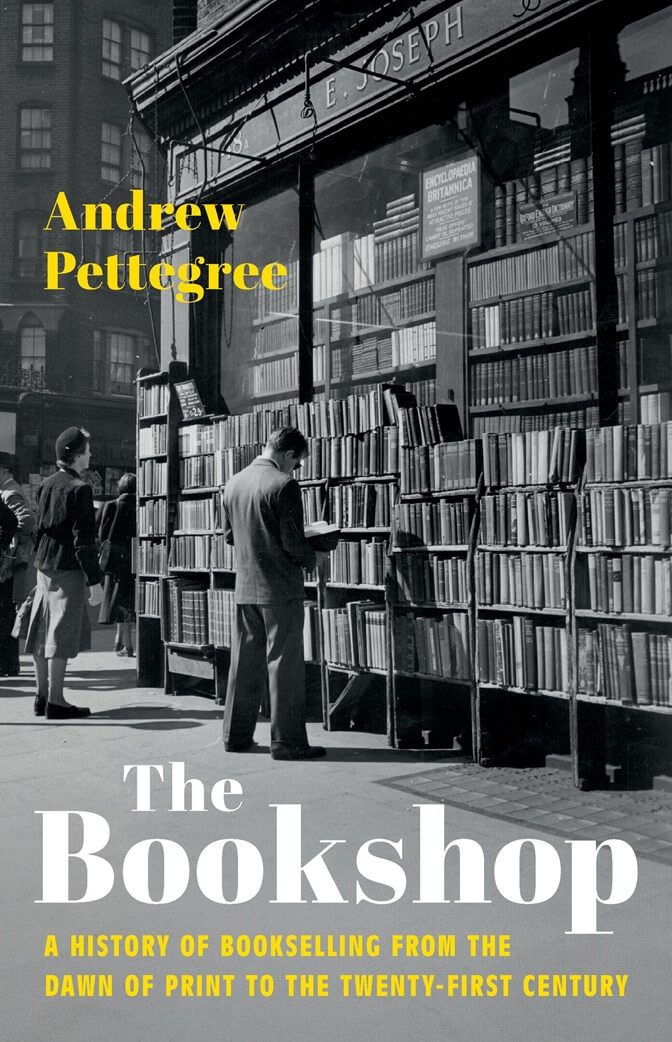
We are fortunate to live at a time when books of all kinds are available from many sources. As historian Andrew Pettegree shows in his lively, thoroughly engaging The Bookshop: A History of Bookselling from the Dawn of Print to the Twenty-First Century, it’s taken many twists and turns to reach this point. The author of The Book at War and The Library, Pettegree is an able guide to the 600-year history of bookselling.
The Bookshop begins with what little we know about the booksellers of Greece and Rome, but the focus promptly shifts to the first four centuries of the print era, from 1450 to 1850. For many of the early booksellers—whether operating out of a single room, a marketplace stall or as traveling salespeople—it was a risky business financially and, in the case of the itinerant bookseller traveling with a wagon or cart, a risky business for personal safety as well.
For a long period, books were expensive, and their primary buyers were doctors, lawyers and members of the clergy who needed reference materials for their work. Even as the market for books expanded, nothing could be taken for granted. Wars, disease, religious differences between Catholics and Protestants, debt and bankruptcy, censorship and losses at sea were just some of the issues booksellers faced. Class politics also came into play: In Europe, the ruling elites wanted to have power over what was published and how it was distributed. Pettegree notes that “booksellers, on the whole, are pragmatists. They succeed because they know their local market and are not looking to lose customers by embracing titles that their patrons find unacceptable.”
By the late 18th and early 19th centuries, there were great improvements in book distribution thanks to railways, steamboats and the steam press. Women’s suffrage movements in North America and Europe spawned feminist bookshops, and political parties printed and sold books to advance their causes. Increased literacy in the middle class also increased demand, and the industry adapted, spreading beyond large cities. Department stores started selling books. Pettegree takes us through the rise (and fall) of chain bookstores and the dawn of online bookselling and Amazon, touching on today’s uncertain book market.
But overall, Pettegree is hopeful, writing, “We live then in an age of uncertainty, but then this was always the case in the volatile book market, with booksellers at all levels seeking new customers, new opportunities and fresh avenues for selling.”