Everyone’s heard of Clarks desert boots.
It’s a staple item in many men’s wardrobes and has come to be a representation of smart-casual style worldwide.
But did you know this boot actually had a really interesting military heritage?

Since WW2, the Desert Boot has played a major part in men’s style. But knowing the difference between your average desert boot and the original Clarks Model is essential.
In this guide, I’ll break down where Clarks desert boots came from, how they’re actually built, how they fit, which of the four current versions to buy, and how to wear them so they look sharp instead of sloppy.
- Clarks Shoes History
- What Is A Desert Boot?
- Did Clarks Invent The Desert Boot?
- How Clarks Desert Boots Are Made (And Where)
- Clarks Desert Boots Sizing And Fit
- Living With A Crepe Sole
- How To Style Clarks Desert Boots
- Are Clarks Desert Boots Worth It?
- Clarks Desert Boots FAQ
Clarks Desert Boots #1: History
Clarks shoes have a long and storied history that dates back to the early 1800s.
In 1825, brothers Cyrus and James Clark were running a sheepskin business in Street, Somerset, when they realized they could make a better slipper out of sheepskin off-cuts. This led to the creation of C. & J. Clark, which (throughout the 19th Century) quickly established itself as a pioneer in new technology such as the introduction of the machine-made shoe.
Clarks also responded to huge social changes such as the industrial revolution by opening new factories in areas where there was a growing workforce.

In 1908, Clarks opened a London office to supplement its shoemaking knowledge with style information from the capital.
It was here that they became known for their high-quality goods that were always in the latest fashion.
In the 1940s, Clarks experienced a period of rapid growth, opening 15 new factories and expanding its reach at home and abroad.
Clarks continued to grow in the following decades, introducing new materials and technologies that helped solidify its place as a world-renowned brand. The company still runs out of Street, Somerset, though Hong Kong-based LionRock Capital has owned a majority stake since 2021.
Clarks Desert Boots #2: What Is A Desert Boot?
The desert boot is a style of men’s boot made popular by Clarks Shoes for men.
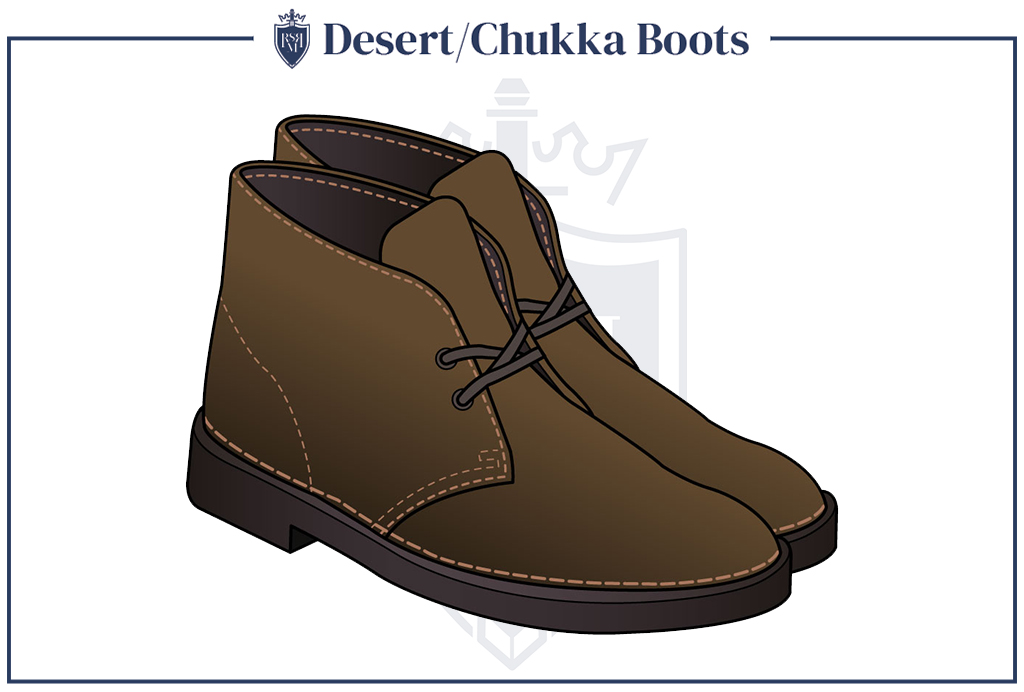
The Clarks desert boot was inspired by the boots worn by British soldiers in World War II who were stationed in the deserts of North Africa.
Typically, this style of boot is constructed from suede or leather. However, modern adaptions vary in material and often can be made from canvas. They also commonly feature a crepe sole, a style made from soft rubber/resin that is both comfortable and durable.
The Clarks desert boot was designed with both form and function in mind. The result is a stylish, versatile, and comfortable boot that can be worn in a variety of settings.
Desert boots sit at the ankle and lace up through just two or three eyelets. From the office to the weekend, the desert boot is a great choice for any man looking to add a touch of style to his casual wardrobe.
Now, you’ll hear “desert boot” and “chukka boot” used like they mean the same thing. Here’s the deal: every desert boot is a chukka, but not every chukka is a desert boot. A chukka is any ankle boot with two or three eyelets and an open lacing. A desert boot is the specific version Clarks made famous — suede upper, crepe rubber sole. Put a leather sole or a smooth calfskin upper on it, and you’ve got a dressier chukka instead.
Clarks Desert Boots #3: Did Clarks Invent The Desert Boot?
Yes and no.
Nathan Clark, the great-grandson of one of the company’s founders, was serving with the British Army in Burma during WW2 when he noticed off-duty officers wearing rough suede ankle boots with crepe rubber soles. The boots came from Cairo’s Khan el-Khalili bazaar. Officers of the Eighth Army had them made there because their issued boots couldn’t handle the heat and sand of the North African desert — and the design itself traces back to the South African veldskoen.
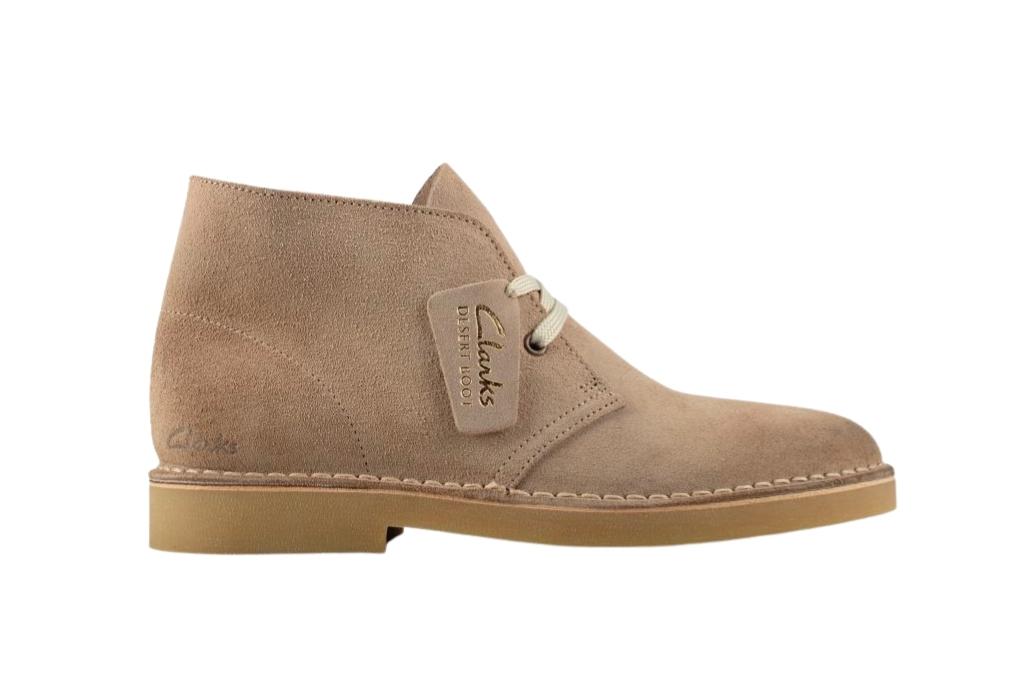
Nathan saw the potential right away and brought the idea home. He showed his prototype at the Chicago Shoe Fair in 1949, and Clarks put the Desert Boot on sale in 1950 — the same boot we know today.
So, while Clarks didn’t invent the Chukka boot, they did bring it into popular culture when they invented the Clarks desert boot.
Clarks desert boots quickly gained popularity in the 1950s as a stylish and comfortable alternative to traditional leather boots. Despite its humble beginnings, the Clarks desert boot is now considered a staple item in any well-dressed man’s wardrobe.
In the 21st century, Clarks desert boots are still as popular as ever and can be found on the feet of style-savvy men all over the world.
The chukka boot design is now the defining style in Clarks’ footwear collections and continues to be one of the brand’s most popular shoes. Thanks to Nathan Clark, we can enjoy the comfort and style of military-style chukka boots both in the desert and at home.
Clarks Desert Boots #4: How They’re Made (And Where)
As with any shoe, construction is King.
A shoe with poor construction isn’t going to last very long, so when it comes to shoes that cost upwards of $100, it’s best to examine the shoe and decide whether or not you think the construction matches up to the price.
In the case of Clarks shoes, I think it definitely does.
Clarks Desert Boots Stitch-Down Construction

A lot of guides get this wrong: the Clarks desert boot is NOT built on a Goodyear welt. Clarks uses stitch-down construction. The edge of the suede upper is turned outward and stitched straight down to the midsole, and the crepe outsole is cemented on underneath. Look at the base of the boot and you’ll see that line of stitching running all the way around.
Why should you care? Stitch-down is lighter and far more flexible than a welt, which is a big reason the boot feels broken in on day one. It can also be resoled, so a good cobbler can pull off a worn crepe sole and put on a new one. What you don’t get is the heavy, structured, decades-long build of a welted dress boot. Different boot, different job. And skip the boot polish here. Suede wants a brush and a protector spray, not wax.
Clarks Desert Boots Suede Uppers
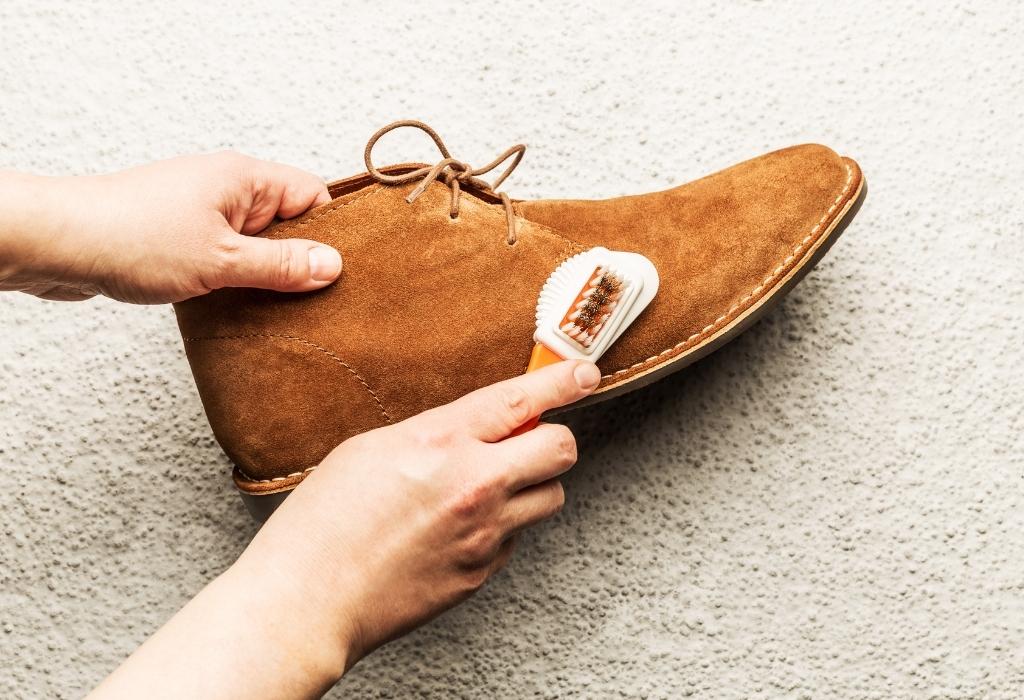
As I mentioned before, Clarks’ desert boots are typically made from suede. Suede is a type of leather that is made from the underside of an animal’s skin. It’s softer and more pliable than regular leather. This means two things: it’s more comfortable, and it’s more susceptible to damage.
To protect your suede desert boots from damage, be sure to use a good-quality suede protector before wearing them in wet or snowy conditions.
Clarks Desert Boots Crepe Soles
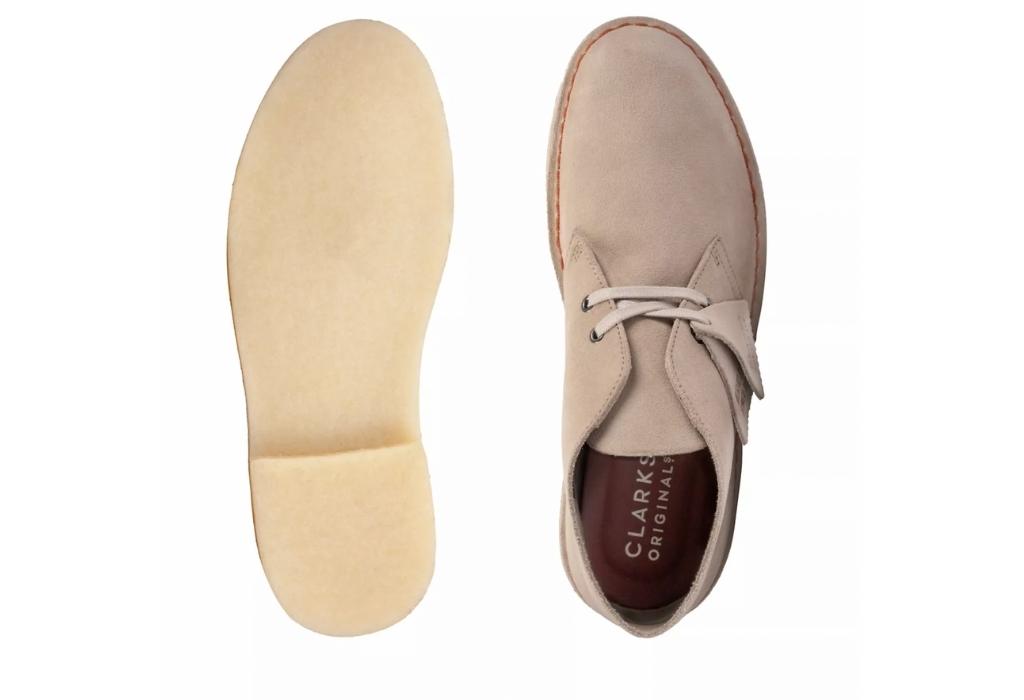
The original Clarks desert boot sits on a natural crepe rubber sole. Crepe is soft and springy underfoot, which is why these boots feel almost like slippers. But it has trade-offs. It slips on wet pavement, it picks up dirt and grit, and it wears down faster than a hard rubber sole. This is a dry-weather boot. (More on that in section #6.)
Overall, the Clarks desert boot is a well-made boot for the money. Keep it out of the rain, resole it when the crepe wears thin, and it will give you years of wear.
Which Clarks Desert Boot Should You Buy?
Today, Clarks sells the desert boot in a few versions. The two most men compare are the standard boot made in Vietnam and the premium version made in Italy. But what are the differences between these two?
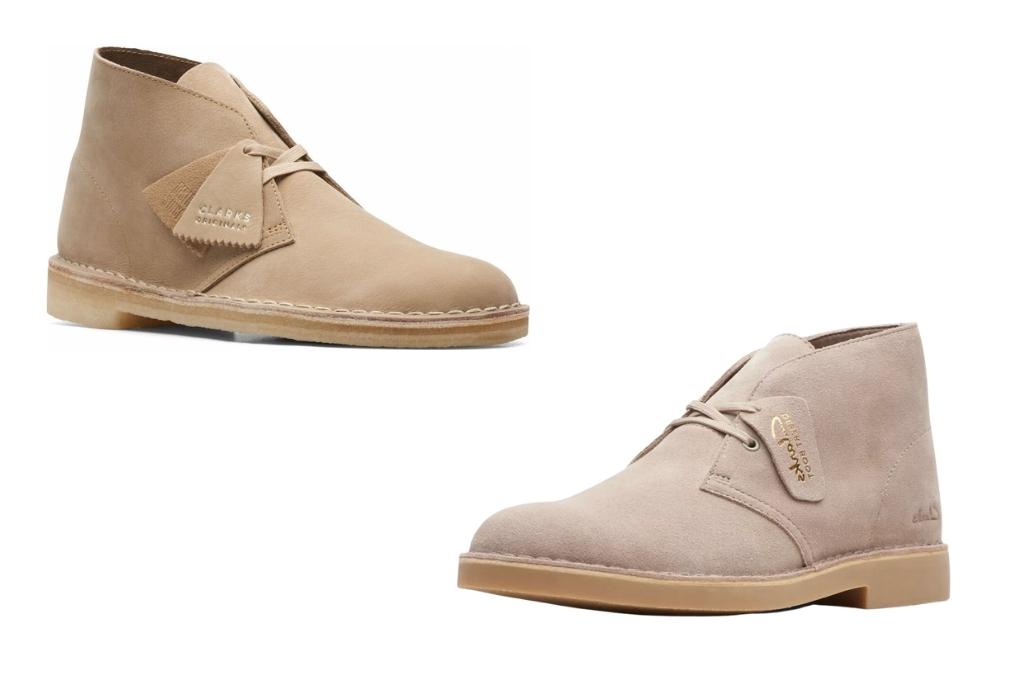
Well, first off, let’s talk price. Clarks desert boots made in Italy typically cost around $190, while those made in Vietnam cost around $140 at full price. So, what do you get for the extra $50?
For starters, Clarks Italian-made desert boots are constructed from higher-quality materials. The leather is softer and of a higher grade, and the soles are also more textured and well-designed.
Additionally, Clarks Italian-made desert boots feature a more comfortable footbed and a slimmer, more stylish silhouette. So, if you’re looking for the best possible quality, then you’ll want to go with the Italian-made model.
However, if you’re on a budget or simply don’t want to pay $190 for a pair of boots, then the Vietnamese variant isn’t a bad choice! At the lower-end price point, you still get a boot that’s well-constructed and will last for many years with proper care.
Two more versions are worth knowing about.
The Desert Boot Evo (about $110) is Clarks’ modern take. It keeps the stitch-down build and the classic look, but swaps the natural crepe for a rubber sole with a crepe-style texture and adds a removable OrthoLite foam footbed. If you’re on your feet all day or you live somewhere wet, this is the one I’d point you to.
The Desert Boot 221 is a limited-edition version made in Portugal. It has a much thicker, layered crepe sole that gives it a chunkier, 1970s look. It runs around $230 at full price and comes and goes in stores, so buy it because you like the look, not because you think it’s the “better” boot.
#rmrs-cmp-clarks *{box-sizing:border-box;margin:0;padding:0;}
#rmrs-cmp-clarks{–navy:#14213d;–navy2:#1f335c;–cream:#faf6ec;–cream2:#f1e9d6;–gold:#c9a24b;–ink:#2a2a2a;–line:#e2d7bd;font-family:-apple-system,BlinkMacSystemFont,”Segoe UI”,Roboto,Helvetica,Arial,sans-serif;color:var(–ink);max-width:860px;margin:32px auto;padding:0 4px;line-height:1.5;-webkit-font-smoothing:antialiased;}
#rmrs-cmp-clarks .cmp-title{text-align:center;color:var(–navy);font-size:22px;font-weight:800;letter-spacing:.2px;margin-bottom:4px;}
#rmrs-cmp-clarks .cmp-sub{text-align:center;color:#6b6250;font-size:13px;margin-bottom:18px;font-style:italic;}
#rmrs-cmp-clarks .cmp-scroll{overflow-x:auto;-webkit-overflow-scrolling:touch;border-radius:12px;box-shadow:0 6px 22px rgba(20,33,61,.12);}
#rmrs-cmp-clarks table{width:100%;border-collapse:collapse;background:var(–cream);min-width:680px;font-size:14.5px;overflow:hidden;border-radius:12px;}
#rmrs-cmp-clarks thead th{background:var(–navy);color:#fff;padding:14px 12px;text-align:left;font-size:15px;font-weight:700;vertical-align:middle;border:none;}
#rmrs-cmp-clarks thead th.cmp-attr{background:var(–navy2);width:18%;font-size:12px;text-transform:uppercase;letter-spacing:.6px;color:var(–gold);}
#rmrs-cmp-clarks thead th .cmp-house{display:block;font-size:11px;font-weight:600;color:var(–gold);text-transform:uppercase;letter-spacing:.6px;margin-top:2px;}
#rmrs-cmp-clarks tbody th{background:var(–cream2);color:var(–navy);font-weight:700;text-align:left;padding:12px;font-size:12px;text-transform:uppercase;letter-spacing:.4px;border-top:1px solid var(–line);vertical-align:top;}
#rmrs-cmp-clarks tbody td{padding:12px;border-top:1px solid var(–line);vertical-align:top;color:var(–ink);}
#rmrs-cmp-clarks tbody td:first-of-type{border-left:1px solid var(–line);}
#rmrs-cmp-clarks tbody tr:nth-child(even) td{background:rgba(201,162,75,.06);}
#rmrs-cmp-clarks .cmp-price td{font-weight:700;}
#rmrs-cmp-clarks .cmp-badge{display:inline-block;margin-top:6px;font-size:10.5px;font-weight:800;text-transform:uppercase;letter-spacing:.5px;padding:3px 8px;border-radius:999px;background:var(–gold);color:#3a2c07;}
#rmrs-cmp-clarks .cmp-badge.alt{background:var(–navy);color:#fff;}
#rmrs-cmp-clarks .cmp-bottom th{background:var(–navy);color:var(–gold);}
#rmrs-cmp-clarks .cmp-bottom td{background:var(–navy);color:#f4efe2;font-size:13.5px;}
#rmrs-cmp-clarks .cmp-note{font-size:12px;color:#8a8071;text-align:center;margin-top:12px;line-height:1.5;}
@media(max-width:520px){#rmrs-cmp-clarks .cmp-title{font-size:19px;}#rmrs-cmp-clarks table{font-size:13px;}#rmrs-cmp-clarks thead th{padding:10px;font-size:13.5px;}#rmrs-cmp-clarks tbody th,#rmrs-cmp-clarks tbody td{padding:10px;}}
| Desert BootThe original | Desert Boot EvoEveryday update | Made in ItalyPremium run | Desert Boot 221Limited edition | |
|---|---|---|---|---|
| Made in | Vietnam | Not listed by Clarks | Italy | Portugal |
| Sole | Natural crepe | Rubber with a crepe-look texture | Natural crepe | Extra-thick, layered crepe |
| Footbed | Thin, minimal padding | Removable OrthoLite foam | Thin, minimal padding | Cushioned footbed |
| Wet weather | Poor | Best of the four | Poor | Poor |
| Look | The classic 1950 shape | Close to the original, slightly roomier last | Classic shape, finer finish | Chunkier, 1970s-style sole |
| Price (approx.) | ~$140 Start here | ~$110 Best value | ~$190 Best finish | ~$230 MSRP |
| Buy it if | You want the real thing at a fair price. | You walk a lot or live somewhere it rains. | You own the original and want the upgrade. | You like a bolder, heavier-looking boot. |
Prices as of September 2026 from Clarks US and END. Clothing. They change by color, retailer, and sale. The 221 runs in limited batches, so availability varies.
My rule: if this is your first pair, buy the original in a mid-brown or sand suede. Both work with navy, grey, olive, and denim. If you need a boot that handles rain and long days on your feet, get the Evo. Move up to the Italian pair only once you know you love the shape.
Clarks Desert Boots #5: Sizing And Fit

Clarks desert boots run a touch big. Most guys do best going half a size down from their sneaker size. If you already own a Red Wing Iron Ranger or an Allen Edmonds Strand, your size in those is a good place to start — men who own both usually wear the same size in each.
Three more things to know before you order:
- There’s one width: medium (D). If you have a wide foot, try them on in a store first, or look at the Evo, which Clarks built on a roomier last.
- The suede stretches. An unlined suede upper molds to your foot fast. A pair that’s snug across the top on day one will loosen up. A pair that’s loose on day one only gets looser.
- Your socks matter. With no lining, the sock does the work a lining would. Try them on with the socks you’ll actually wear. A thin dress sock and a thick wool sock can be half a size apart.
The fit check: about half an inch of room past your longest toe, a snug hold across the top of your foot, and very little heel lift when you walk. A bit of heel slip in a brand-new pair is normal. A heel that pops out of the boot is not.
Clarks Desert Boots #6: Living With A Crepe Sole

The crepe sole is the best and the worst thing about this boot. Here’s what you’re signing up for and how to handle it.
Rain And Snow
Don’t. Crepe gets slick on wet pavement and suede soaks up water, so a surprise downpour can leave you slipping and stained. Spray new boots with a suede protector before the first wear and redo it every few months. If you live somewhere it rains a lot, buy the Desert Boot Evo. Its rubber sole grips far better in the wet.
Heat, Cold, And Dirt
Crepe reacts to temperature. It stiffens in real cold and softens in serious heat. It also grabs grit as you walk, which is why an old pair’s soles turn grey. A suede eraser and a stiff brush clean up most of it. And since the boots are unlined, they won’t keep your feet warm in winter anyway. Save them for spring, summer, and dry fall days.
Resoling
Crepe wears faster than hard rubber, especially at the heel. When the heel gets thin or starts to split, take the boots to a cobbler before the wear reaches the stitching. Because they’re stitch-down, a resole is routine work, and a fresh crepe sole gives you a like-new boot for less than a new pair.
Clarks Desert Boots #7: How To Style Clarks Desert Boots
As with any item of clothing, knowing how to style it to suit different occasions and formalities is essential.
You can buy the most stylish clothes on the planet, but without a basic understanding of how to pair them with other garments, you’re going to find it hard to look presentable and attractive.
Don’t leave it up to guesswork. Below, I’ve outlined a few basic ensembles to help you successfully style your Clarks desert boots.
Get The Trouser Hem Right First

Before we get to outfits, here’s the mistake I see all the time. A guy buys a great pair of desert boots, then wears them under jeans that pile up at the ankle. The boot disappears, and the whole outfit looks sloppy.
A desert boot is low, soft, and round in the toe. It needs a clean line above it to look intentional. So:
- Aim for no break or a slight break. The hem should just touch the top of the boot, not stack on it.
- Keep the leg opening trim. A slim or tapered leg frames the boot. A wide or bootcut leg swallows it.
- Cuffs work. With jeans or chinos, a single narrow turn-up sitting right at the top of the boot shows it off.
- Not sure? See your tailor. A hem and a taper are cheap fixes, and they’ll do more for this boot than any outfit formula.
Get the hem right and every outfit below works. Get it wrong and none of them will.
Smart-Casual Office Attire
Clarks desert boots for men are the perfect shoe for the smart casual office.
They are stylish and comfortable, and they pair well with a button-down Oxford shirt and chinos/smart pants.
Clarks desert boots sit nicely in between the formality of sneakers and loafers, which should allow you to create a smart-casual appearance in line with the dress code requirements of the modern office. If the weather’s on the cold side, add a textured blazer to your outfit to add a touch of style and warmth.
To keep your outfit casual, avoid wearing a tie and opt for a dive watch or chronograph instead of a leather strap dress watch.
Casual Weekend Wear
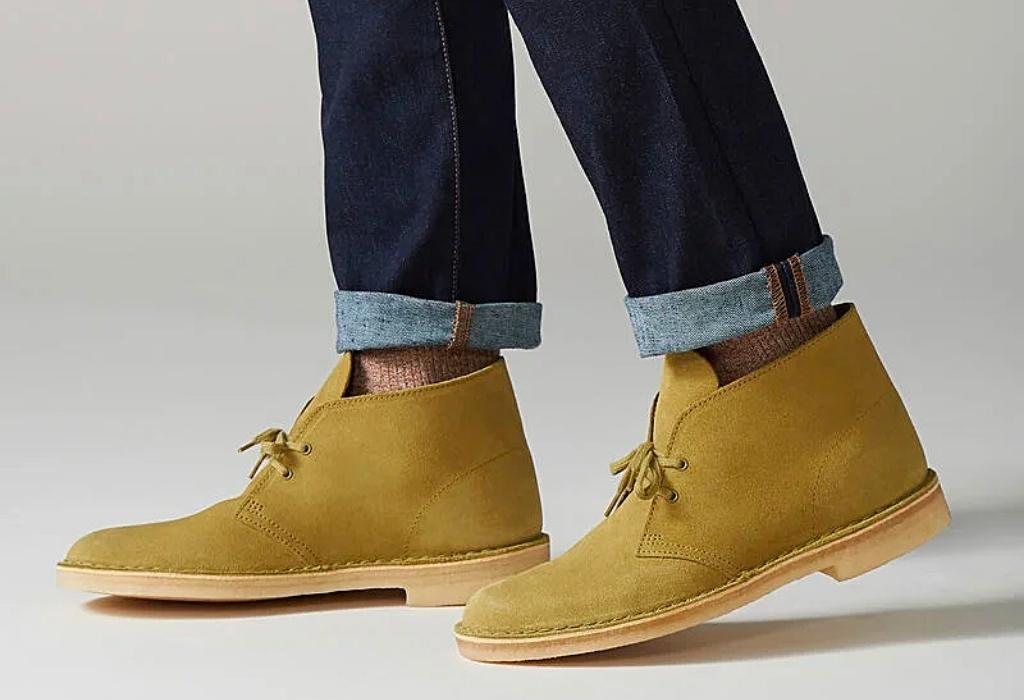
Clarks desert boots are also great for casual weekend wear. They go well with jeans and chinos.
For a relaxed look, pair your Clarks desert boots with some raw denim jeans and an untucked flannel shirt. If it’s particularly hot outside, opt instead for a linen shirt and lightweight chinos.
Either way, desert boots are a great option for casual weekend days out or a classic summer BBQ.
Be warned: suede is not the most durable material in the world. If you plan on playing sports or being around water, avoid suede and opt for leather/canvas boots instead. Think of suede desert boots as the middle ground between comfort and formality – they’re not as comfortable as sneakers but they look a lot better.
Summer Wedding Attire
Just because weddings are formal events, doesn’t mean you can’t rock a pair of Clarks desert boots with your usual wedding attire.
In the summertime, light colors and airy fabrics are king. So wearing a light-colored suit with a pair of desert boots can be a great way to stay cool and comfortable while still looking stylish.
If you’re feeling particularly daring, ditch the socks and let your ankles breathe. Just make sure your pants are the right length – you don’t want to be showing off too much skin! Pro Tip: Wear no-show socks – your feet and shoes will thank you for saving them from stench and sweat!
Make sure to wear a tie if you’re attending the wedding ceremony. You can always lose it when it comes to the dance floor, but for the main event, you should be looking your best. You could always match the color of your tie to the color of your desert boots. This is a great way to add a touch of personality and style to your outfit without going over the top.
Clarks desert boots are versatile and stylish shoes that can be dressed up or down to suit any occasion. With a little bit of knowledge, you can easily incorporate them into your wardrobe and start enjoying one of the most comfortable boots a man can own.
Are Clarks Desert Boots Worth It?
Yes — if you know what you’re buying. At around $140, you get a boot with more than 75 years of history, a shape that works with jeans, chinos, and a casual blazer, and comfort you’ll feel on day one. Very few boots at that price are this easy to wear.
What they’re NOT is a winter boot, a rain boot, or a dress boot. If you can only own one pair of boots for every season, start with a leather Chelsea or a welted work boot. But as a second pair for dry days and smart-casual outfits, the Clarks desert boot earns its spot in your closet.
Clarks Desert Boots FAQ
Are Clarks desert boots true to size?
Most men find they run a little big. Start half a size down from your sneaker size, and remember the suede will stretch as you wear them.
Can you wear Clarks desert boots in the rain?
Not the originals. The natural crepe sole slips on wet pavement and the suede soaks up water. Treat them with a suede protector, and if you need a wet-weather option, get the Desert Boot Evo with its rubber sole.
Where are Clarks desert boots made?
The standard Desert Boot is made in Vietnam. Clarks also sells a premium version made in Italy and the limited-edition 221, made in Portugal. The originals were made in England.
What’s the difference between a desert boot and a chukka boot?
A desert boot is a type of chukka. Both are ankle boots with two or three eyelets, but a desert boot has a suede upper and a crepe rubber sole. Other chukkas come in smooth leather with leather or rubber soles.
Looking to up your boot game? Check out my guide to spotting a quality pair of men’s boots.
The post Clarks Desert Boots: Are They Worth It? (Fit, Models & How to Wear Them) appeared first on Real Men Real Style.