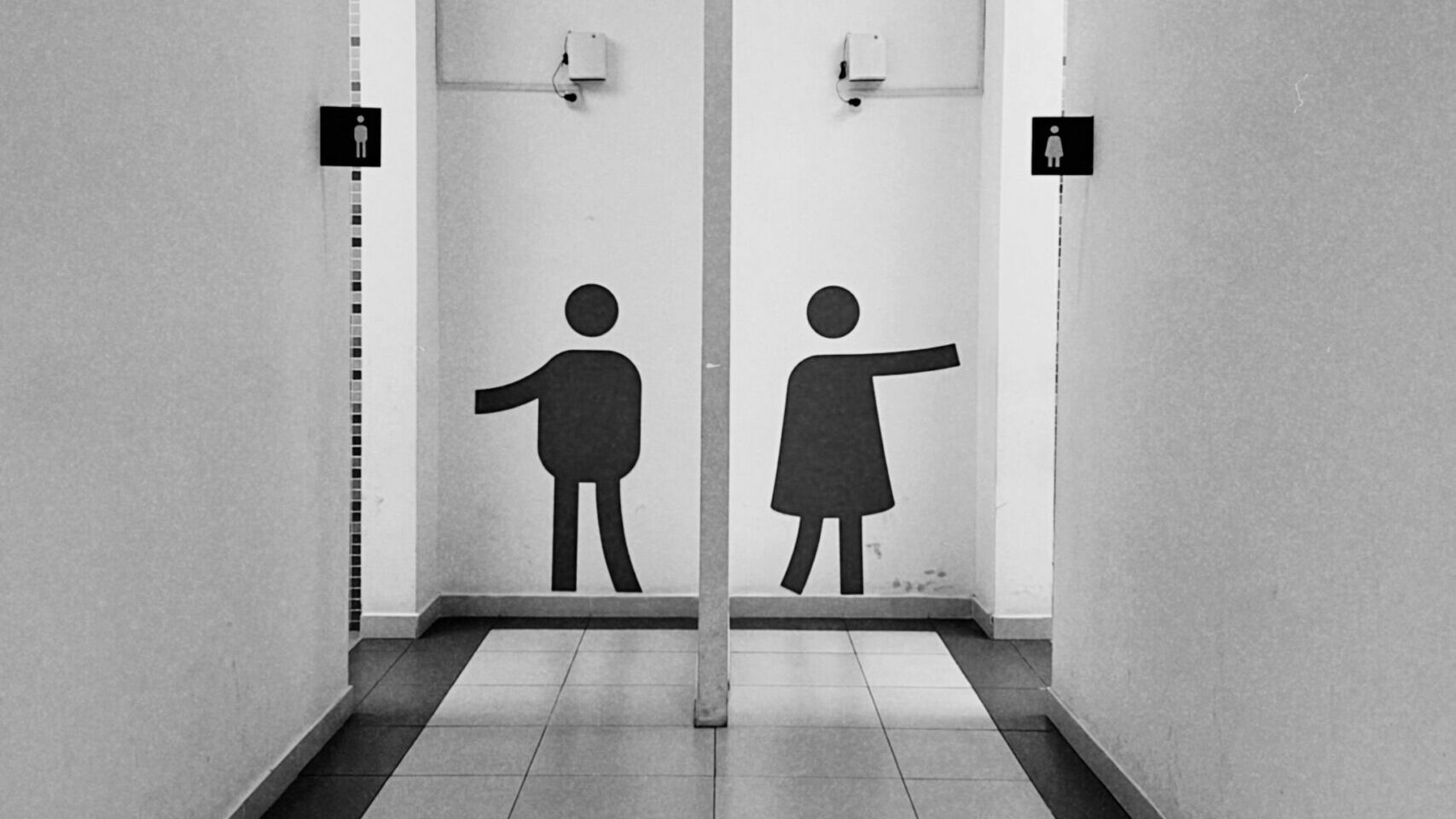
As Idaho’s new criminal bathroom law begins taking effect, transgender residents are turning to one another for something many people rarely have to think about: where it’s safe to use the restroom.
In response to House Bill 752, a new crowdsourced online map is helping transgender and gender-diverse Idahoans locate bathrooms they can use with greater confidence. The project, created by the nonprofit Trans Affirm, highlights gender-neutral and single-user restrooms submitted by community members across the state.
For many, the map is less about convenience than peace of mind.
“We’re trying to give people options,” Scar Rulien, a board member for Trans Affirm, told reporters. “It is already a confusing law as it is. And it can be scary for transgender people, who identify as one gender, to use the bathroom that is of the gender that they don’t identify as.
“Especially if they are actively transitioning and look like the gender that they identify as, it can pose a risk to their safety.”
The nonprofit began collecting submissions shortly after lawmakers approved the legislation this spring. Hundreds of recommendations have since been added, creating a statewide resource designed by the very people who will rely on it most.
A Community Response To A New Reality
House Bill 752 makes it a crime for someone to “knowingly and willfully” enter a restroom or changing room designated for the opposite sex in many public and private spaces throughout Idaho.
Violations can carry steep penalties. A first offense is a misdemeanor punishable by up to one year in jail. A second conviction within five years can become a felony with a possible five-year prison sentence.
The law applies to government-owned buildings and many private businesses.
Facing that reality, advocates say practical resources became just as important as legal challenges.
For now, Rulien encourages transgender people to use gender-neutral facilities whenever possible if doing so feels safest.
Federal Court Adds Temporary Protections
The legal picture shifted before the law officially took effect.
Last month, U.S. District Judge Amanda K. Brailsford issued a preliminary injunction blocking parts of the bathroom provision while a lawsuit filed by the American Civil Liberties Union moves forward.
Under that order, transgender people may use single-user restrooms that match their gender identity. They may also use multi-user restrooms consistent with their gender identity when a single-user option is unavailable on the same floor.
Even with those protections, advocates say uncertainty remains.
“It’s sort of a Band-Aid on a bullet hole-type situation,” Rulien said.
“… This is great, and it’ll definitely help a lot of people. But it’s not exactly the help that will be life-saving, or exactly the help that we need in this current moment.”
The injunction also raises practical questions about enforcement, including how authorities would determine whether someone knowingly violated the law if no nearby single-user restroom was available.
Questions Around Enforcement Remain
State and local law enforcement officials have acknowledged that enforcing the law may not be straightforward.
Idaho Fraternal Order of Police President Bryan Lovell said officers responding to complaints could begin by asking someone about their gender and reviewing identification. Beyond that, he said, each situation would depend on its own circumstances.
“We don’t have a test or a scanner or anything else that we can just go up to someone and… take a picture and go, ‘Oh, this is your gender,’” Lovell said.
Canyon County Prosecuting Attorney Chris Boyd also acknowledged that proving biological sex could become legally complicated in some cases. He said obtaining physical evidence could require a search warrant because of the invasive nature of such an examination.
Those unanswered questions have become another source of concern for transgender Idahoans already weighing whether it feels safe to enter public restrooms.
Advocates Say Safety Comes First
Organizations serving Idaho’s transgender community say the conversation has shifted from rights to risk management.
Preston Pace, co-founder of Trans Joy Boise, said the current climate has made personal safety the immediate priority rather than public acts of protest.
“It’s just too dangerous right now,” Pace said. “Because on top of criminal charges, we’re already seeing nationwide instances of aggression and violence in public restrooms, with the public taking on the responsibility of policing these bans.”
Research published in 2025 by the UCLA School of Law’s Williams Institute found no evidence that allowing transgender people to use bathrooms matching their gender identity increases safety risks for others. The study did find that transgender people denied access to appropriate facilities reported higher rates of verbal harassment and physical assault.
As legal challenges continue, Trans Affirm’s bathroom map has become more than a directory. It represents a community stepping in to solve an immediate problem while broader questions play out in court.
For transgender Idahoans navigating a changing legal landscape, knowing where the nearest welcoming restroom is can make an everyday task feel a little less uncertain.